Call us (912) 674-0619
 goldenislesfae@gmail.com

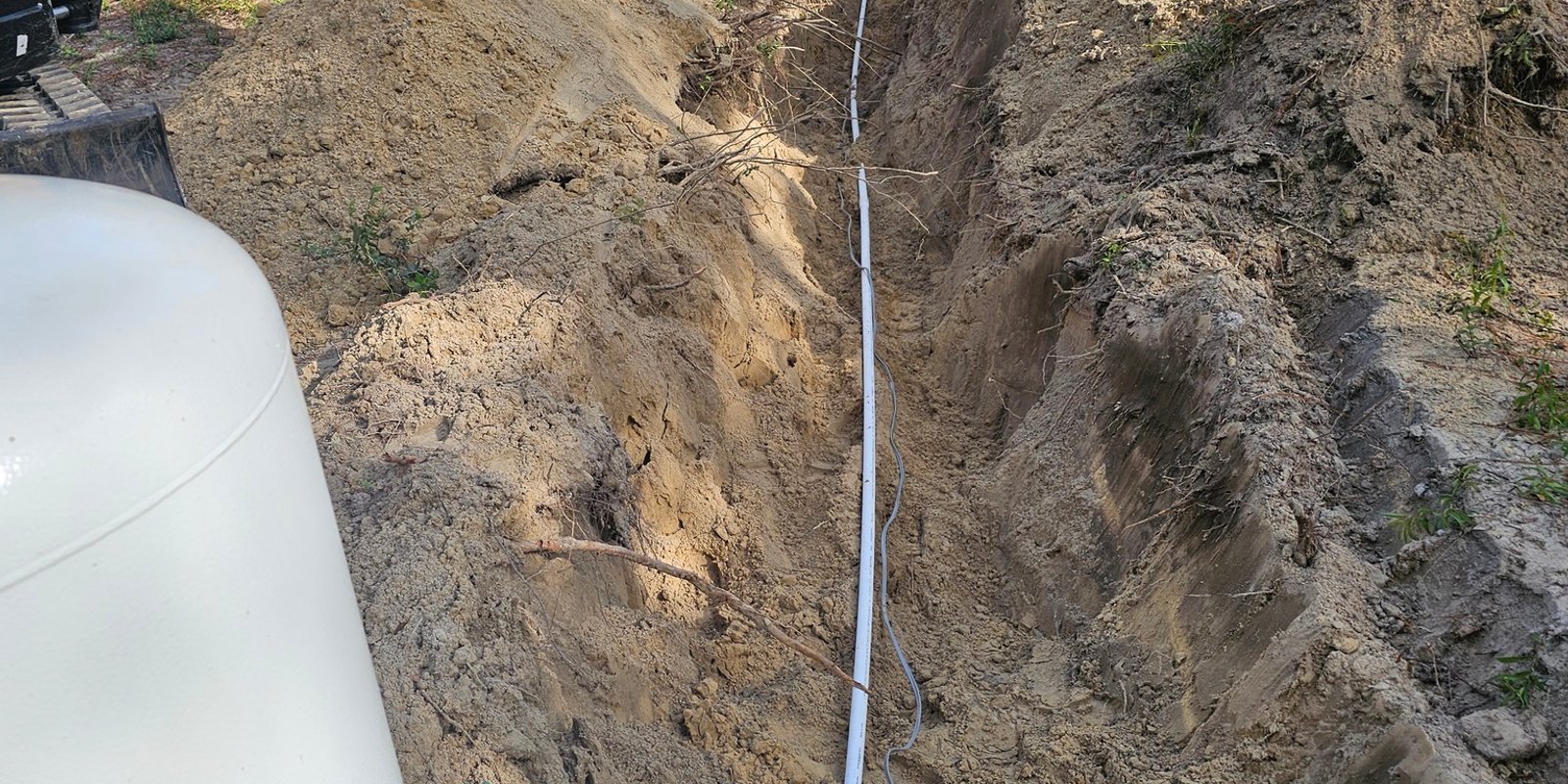

We see the most property complaints in Glynn County about standing water. It's not usually a single issue with a single solution. There's water coming from somewhere. Water sitting somewhere. And sometimes there is somewhere for the water to go. Sometimes not. Pinpointing the weak link is the bulk of the effort.
Why it happens here specifically
The ground is flat. It's not so much that there is natural slope. It's that there is not much natural slope. So when it does fall, it's prone to hang out right there.
The water table is high. If you have a low lying lot or a marsh boundary lot, the water table is not too far down. If you have a wet spell, the ground is soaked. There's no more room for water in there. It's no longer "it drains away eventually" by September.
The rain arrives all at once. A lot of water can fall very quickly with our summer thunderstorms. Ground that is okay with steady rain gets overloaded when an inch falls in an hour.
The soils are difficult. Sand drains fast. It erodes and moves. Clay basically doesn't drain. Often lots have a layer of sand for topsoil and then something clay down there that puts the nail in the coffin a foot deep. So it looks good and it's like a tub.
Development changed the pattern. Driveways, roofs, patios... all that ground that once would have soaked up the water now sheds it. A new house uphill can completely change your lot for the worse. Without anything being done wrong.
Diagnose before you dig
Get out in a downpour (or shortly afterwards). Observe. That's ugly. That's the only way to tell.
- Where does the water come from? Your roof? Paving? Next door? Road?
- Where does it sit, and how long? Annoyance for a few hours. Problem for days. Different problem if permanently wet.
- Is it against the house? That's the crisis part.
- Does the ground slope toward the problem or away? Ten feet string and level, not eye. Land which appears level can actually be sloping the wrong way.
- Dig a hole. Wet area, eighteen inches deep. Clay? Does the hole flood up the sides, or from the bottom? Bottom is water table.
The last part differentiates between surface drainage and ground water. Entirely different solutions.
The fixes, and what each one is actually for
Regrading: reshaping the ground
Solves: puddles, water flowing toward your house, lack of grade.
The basics, and likely first step. Water flows because it follows shape, so change shape. Fill the puddle area. Get some grade away from your house (general guideline is 6" in first 10'). Get a solid path to take the water somewhere.
Limitations: You need someplace to send it down hill. That is the problem for flat lots. You can't just legally deposit your water on your neighbor. More in what grading is and when a property needs it.
Swales: shallow shaped channels
Solves: moves surface water through your property, catching the inflow from upstream.
Swale: a broad, shallow, gently sloping trough (usually grassed). This catches surface water and directs it to where you want it to go. It's broad and shallow, so you can mow it and it blends in with the rest of your lawn. It doesn't look like a ditch.
Swales are great for flat properties on the coast. They work with very small drops and can take a lot of water when it rains hard. Very often what you need instead of a French drain that would get overwhelmed.
Limitations: takes up space, needs a real drain for it to go to, you have to take care of it so it doesn't fill with silt or get smashed down.
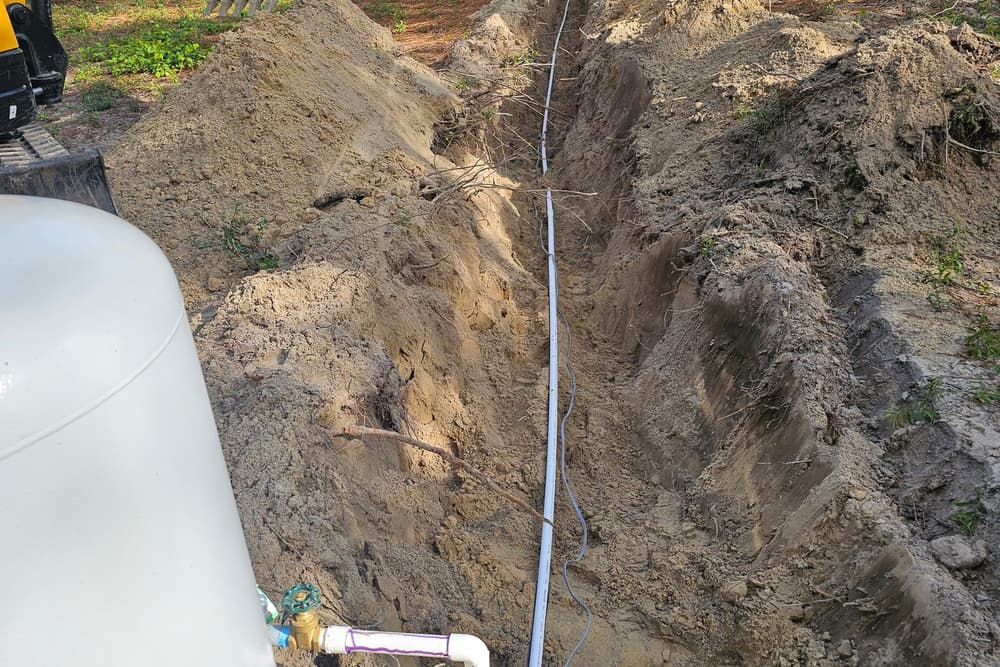
French drains: gravel-filled trench with perforated pipe
Solves: constant soggy spot. ground water. water against the house.
Trench. A tube. It's perforated. It's wrapped in filter fabric. It's filled with washed gravel. Soil water goes in. It goes away.
The two ways they fail here, both common:
No outlet. What's a French drain? A pipe. A pipe that isn't going somewhere lower, it's a ditch in the ground full of water. Ok, with flat ground, the whole problem is getting an outlet. "it'll soak away" isn't an outlet if the water table is already high.
Silting up. No good filter fabric? No good washed stone? Fine sand sneaks in and clogs it. Not a possibility but something that happens with poorly built drains in our sandy soils. They last decades if done right.
Downspout extensions: the cheapest thing on this list
Solves: roof water dumped at the foundation.
A roof dumps a ton of water over a very small area. If you are dumping your downspouts at the bottom of your wall... that's often the whole issue right there.
To extend them correctly (out 10ft or bury them and direct them to an appropriate place to discharge)... is cheap and solves a lot of "drainage problems". Always give this a shot first before doing expensive things.
Dry wells and catch basins
Solves: catching water at a low point without a gravity outlet
Dry well: underground chamber to contain water and absorb away. Catch basin: grated inlet for surface water.
The coastal caveat is significant: a dry well needs the soil around it to take the water. at high water table it gets filled up from below and it's useless when you need it. dry wells are often a let down here for low lots.
Pumps
Solves: can't possibly drain by gravity.
Sometimes the plain truth is the only way for incredibly flat, and low lying land. Sump and pump to a legal discharge. It is the solution of last resort. Moving parts. requires electricity. Doesn't work during the storm that kills power. But it works.
Matching the fix to the problem
- Water against the house: downspouts. Then, regrade for fall. Urgent.
- Puddle in a low spot, dries in a day or two: regrade or fill.
- Wide area soggy for days: swale, or regrade with defined outlet.
- Narrow strip permanently soft: french drain. If you have an outlet.
- Water running in from a neighbor or the street: intercepting swale along the edge.
- Water table at the surface in wet season: actually, this may be more managing than curing. raise the usable area. Or put a deck over it.
That last one is actually underrated. A deck or porch can take your seating area up off the always-damp ground. cheaper than battling the water table.
Where it stops being a DIY question
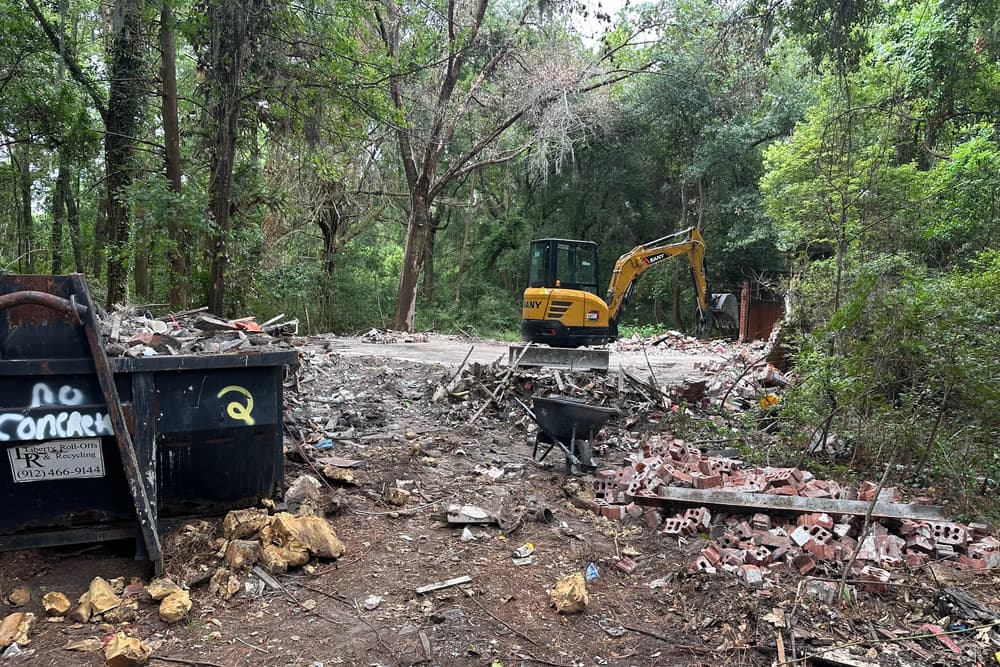
Call someone if there is water coming into the house or crawl space. if you are not sure where an outlet is. If it is on a neighbor's property. if it is severe erosion. If any part of the work is near tidal marsh or wetlands. You have to check this one before you start digging. See clearing near marsh and wetlands.
You might need a land disturbance permit for larger projects. Check with Glynn County Community Development or your city.
What it costs
Really, it's all over the board. Adding downspout extensions is a minor project. Well constructed French drain with proper outlet or regrading problem area often run in the $2,000 to $8,000 range (depending on length, depth, access, what you do with the spoil, etc). More for property wide drainage solutions.
It's quantity of material, equipment access, length of water you have to move, on site spread of excavated material or hauled away.
Come and watch the water with us
Diagnosing drainage is done on site. If you can give us a call right after the rain. It is more helpful to see where it is going than to describe it.
We do excavation, drainage, grading in Brunswick, St. Simons Island, Jekyll Island and all the surrounding counties.
Ask for a free site visit or call (912) 674-0619