Call us (912) 674-0619
  goldenislesfae@gmail.com

A fence that would last twenty years in Atlanta can look tired in six on St. Simons Island. The Golden Isles are beautiful and genuinely hard on building materials, and the difference between a good choice and a bad one here is not taste — it is years.
Three things do the damage: salt, moisture, and wind.
What the coast actually does to a fence
Salt arrives as airborne spray and settles on everything. It is corrosive to steel, and it is merciless on cheap fasteners. The fence boards are rarely what fails first — the screws, nails, hinges and latches are.
Moisture is constant. High humidity, heavy summer rain, and a water table that sits close to the surface on low lots and marsh-front property. Wood stays damp longer here, and the zone where a post meets the ground is where rot begins.
Wind peaks in hurricane season, June through November, but a good coastal squall will test a fence any month of the year. A six-foot solid privacy fence is effectively a sail, and it transfers everything it catches into the posts.
Sun matters too. UV fades and embrittles plastics and dries out timber, and we get plenty of it.
Wood
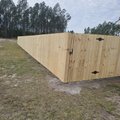
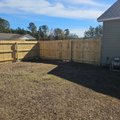
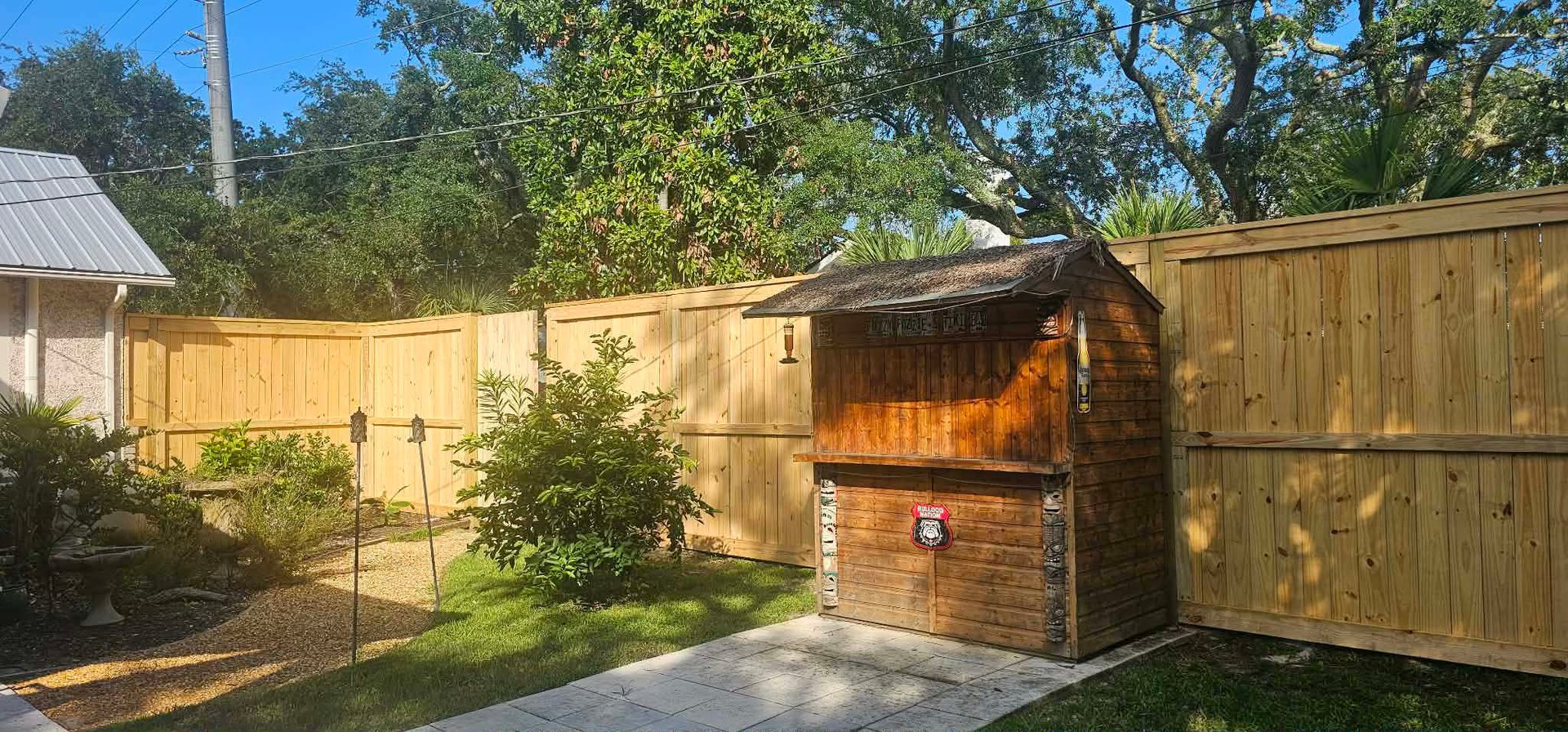
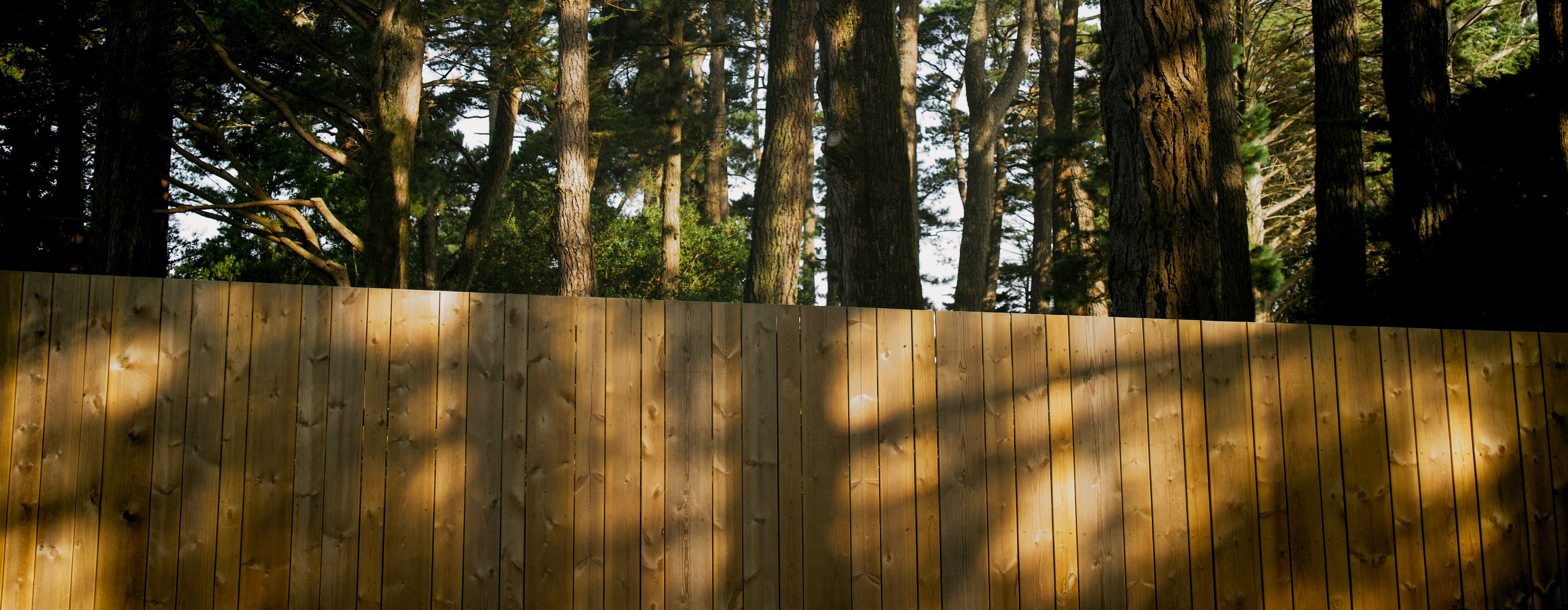
Pressure-treated southern yellow pine is the workhorse of this coast, and for good reason: it is affordable, it is available everywhere, it looks right against live oaks and Spanish moss, and it can be repaired one board at a time.
It also asks more of you than anything else on this list. Expect to clean and seal it periodically, expect some boards to cup or twist as they dry, and expect the posts to be the part that eventually decides the fence's fate.
Buy it properly and it does well. The things that matter:
- Ground-contact rated treatment for anything going in the soil, not above-ground rated. This is not a detail — it is the whole ballgame.
- Hot-dipped galvanized or stainless fasteners. Electroplated screws will rust through and streak the boards long before the timber gives up.
- Posts set deep, in properly placed concrete, with the hole shaped so water drains away rather than sitting around the post.
Cedar is available and resists decay better, at a meaningful premium. Most people here go with treated pine and spend the difference on better hardware. There is more on species and styles on our wood fencing page.
Best for: privacy on a budget, traditional looks, long runs where repairability matters.
Vinyl
Vinyl is the low-maintenance answer, and on the coast that argument is stronger than it is inland. Salt does not corrode it. Moisture does not rot it. Insects ignore it. You wash it with a hose and that is roughly the whole maintenance programme.
The caveats are real but manageable. Cheap vinyl gets brittle under years of Georgia sun and cracks on impact; quality panels with proper UV inhibitors do not. It cannot be repaired invisibly — a damaged panel is replaced, not patched. And because vinyl privacy panels are completely solid, they catch every bit of wind, so the posts and the post setting have to be right.
Up front it costs more than wood. Across fifteen years, on a salt-exposed lot, it frequently costs less. See vinyl fencing for styles and colors.
Best for: owners who want to stop thinking about the fence, pool surrounds, bright clean looks.
Aluminum
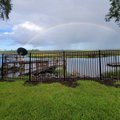
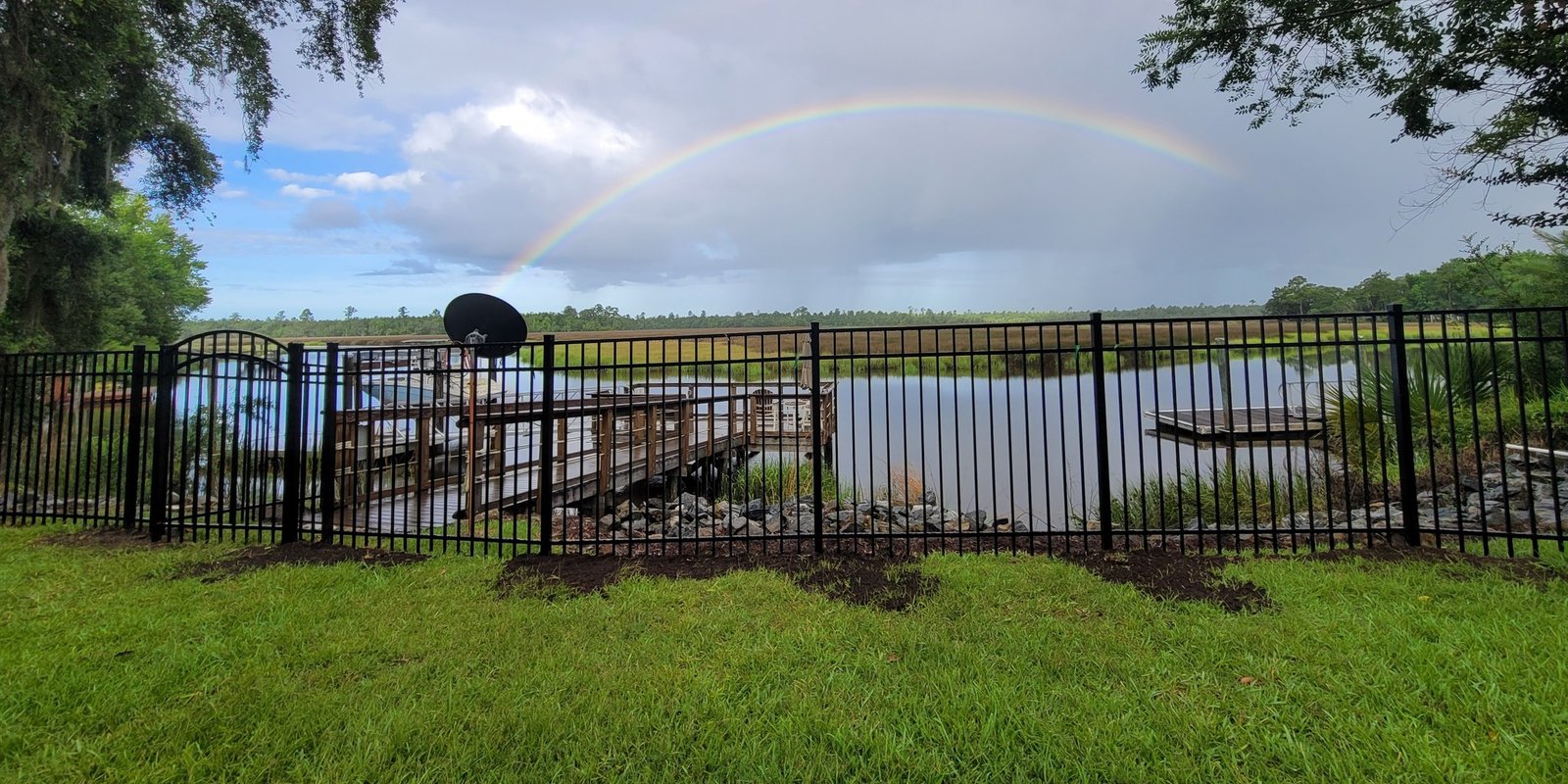
If there is a material that the Georgia coast was made for, this is it. Aluminum does not rust. Powder-coated aluminum shrugs off salt air in a way steel simply cannot, and it is the reason you see so much black ornamental fencing along the marsh and around island pools.
It is open, so wind passes straight through it — a genuine advantage on an exposed lot in hurricane season, and the reason it survives storms that flatten solid fences. It keeps your view, which on a marsh-front or water-view property is often the entire point. It is light, strong, and it needs essentially no maintenance.
What it does not do is give you privacy. You can see through it, by design. It is also the most expensive option per foot for most residential jobs.
Do not confuse it with wrought iron or steel. Those look similar from ten feet away and behave completely differently in salt air. Our aluminum fencing page covers the distinction.
Best for: marsh and water views, pool enclosures, exposed windy lots, anywhere you want security without a wall.
Chain link
Unglamorous, effective, and cheap. Galvanized chain link holds up reasonably well; black or green vinyl-coated chain link holds up better near salt and looks considerably less industrial.
The weak points are the fittings and the tension hardware, which are steel and will corrode if they are not properly coated. As with everything else here, the fence outlives its hardware only if the hardware was chosen for the environment.
Best for: dog runs, back boundaries, utility areas, large areas on a budget.
Farm and field fencing
On acreage out in Glynn, McIntosh and Camden counties, the calculation changes entirely. Woven wire and field fence with treated posts cover long distances at a fraction of the per-foot cost, and the priority shifts to keeping livestock in and staying upright through storms rather than to appearance. See field fencing for what that involves.
So which one
If you want privacy and you are watching the budget, treated wood with good hardware. If you want privacy and you would rather never think about it again, vinyl. If you have a view worth keeping, a pool to enclose, or a windy exposed lot, aluminum. If you need to enclose a lot of ground cheaply, chain link or field wire.
The honest truth is that on this coast, the material matters less than the details underneath it. Post depth, post spacing, concrete, and the metal your fasteners are made of will decide whether your fence is standing in fifteen years. We have watched too many good materials fail on bad installations to pretend otherwise.
Want a straight opinion about your particular lot, your exposure and your budget? Get a free quote or call (912) 674-0619. We will tell you what we would put in if it were our yard — and there is more about the areas we cover on our St. Simons Island page.