Call us (912) 674-0619
 goldenislesfae@gmail.com

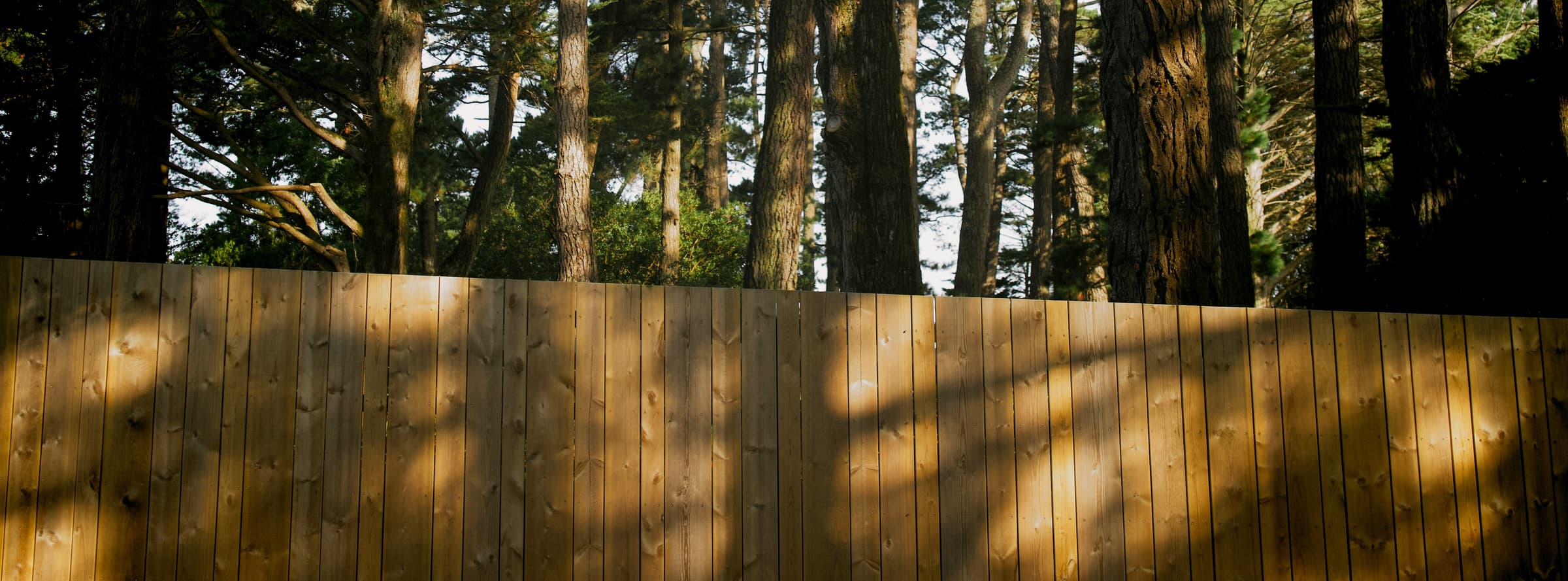

Most fence reviews are designed to try and upsell you on the most expensive option. Not this one. Any of these three materials is the correct choice for someone. The question is what's the correct choice for your lot?
We install all three of these around the Golden Isles. We have opinions. But it's going to be about you, not our profit margin.
The short version
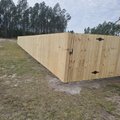
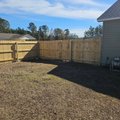
- Wood if you want privacy and low initial investment, love the look of timber, willing to maintain.
- Vinyl if you want privacy, never ever want to think about the fence ever again.
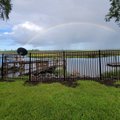
- Aluminum if you have a nice view you don't want to give up, you have a pool you need to fence, you have a windy open spot.
And here's why...
Up-front cost
Quick install cost ballparks for the area:
- Wood (privacy) (6'): $25-$45/LF (ballpark)
- Vinyl (privacy) (6'): $35-$60/LF (ballpark)
- Aluminum (ornamental): $40-$75/LF (ballpark)
Wood is a clear winner from the start. You can dig into each of these a little more in our guides on wood fence cost, vinyl fence cost, and aluminum fence cost.
Cost over twenty years
This is the more useful one. Also re-sorts the list.
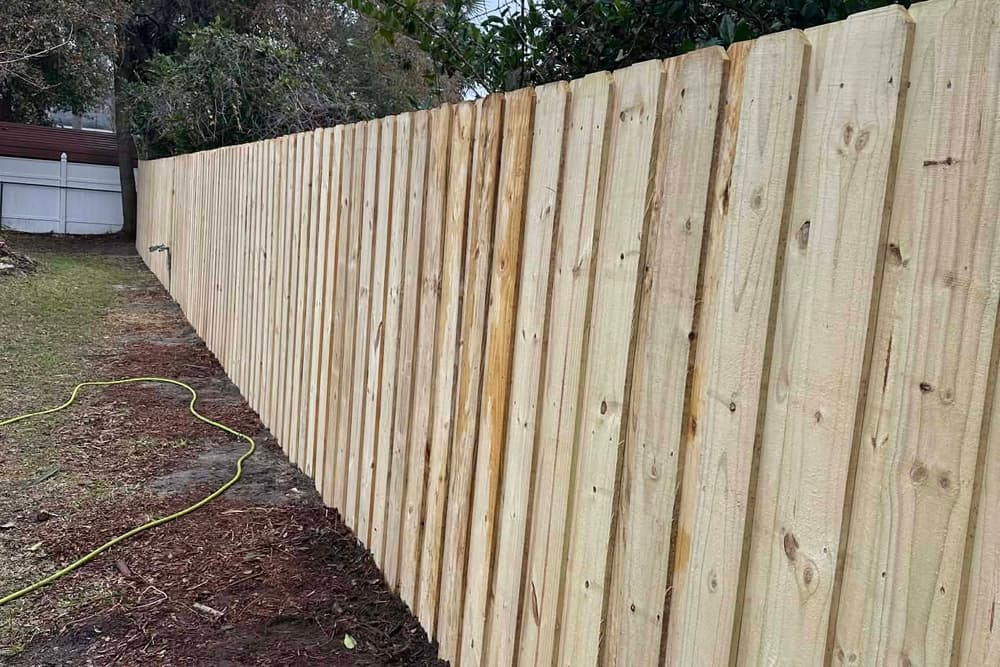
Wood has actual ongoing costs. Every few years clean & re-seal. Replace some boards now and again. Post work eventually. Much faster on salt-exposed lot with cheap fasteners. The good thing about wood is that all this is cheap per event, and can be done as spot repairs.
Vinyl has almost no ongoing costs. Just wash. Often for a coastal lot you will find a quality vinyl fence cheaper than wood after 20+ years because the cost of maintenance is nearly zero.
Aluminum has almost no ongoing costs. Probably most durable on salt exposed property. Unfortunately it never provides privacy so for many folks it's not really a comparison.
Basically the honest bottom line is that wood is cheapest to purchase and most costly to own. Vinyl and aluminum are the other way around.
Privacy
At six feet, wood and vinyl give you full privacy. You won't get any with aluminum. You can't even make it happen.
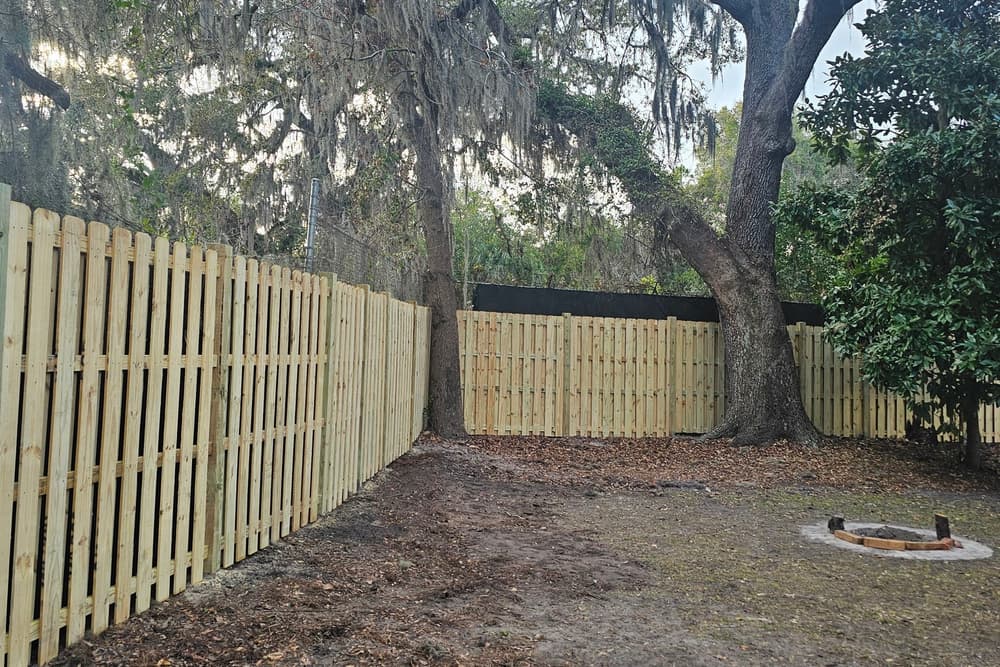
But wood has the advantage of shadowbox and board-on-board. These will be finished on both sides and will allow some airflow. Privacy panels from vinyl will be solid and that is a plus for privacy but a minus for wind.
If you're just looking for privacy, aluminum is out. So now we are just talking wood vs. vinyl.
Appearance
Truly subjective.
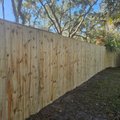
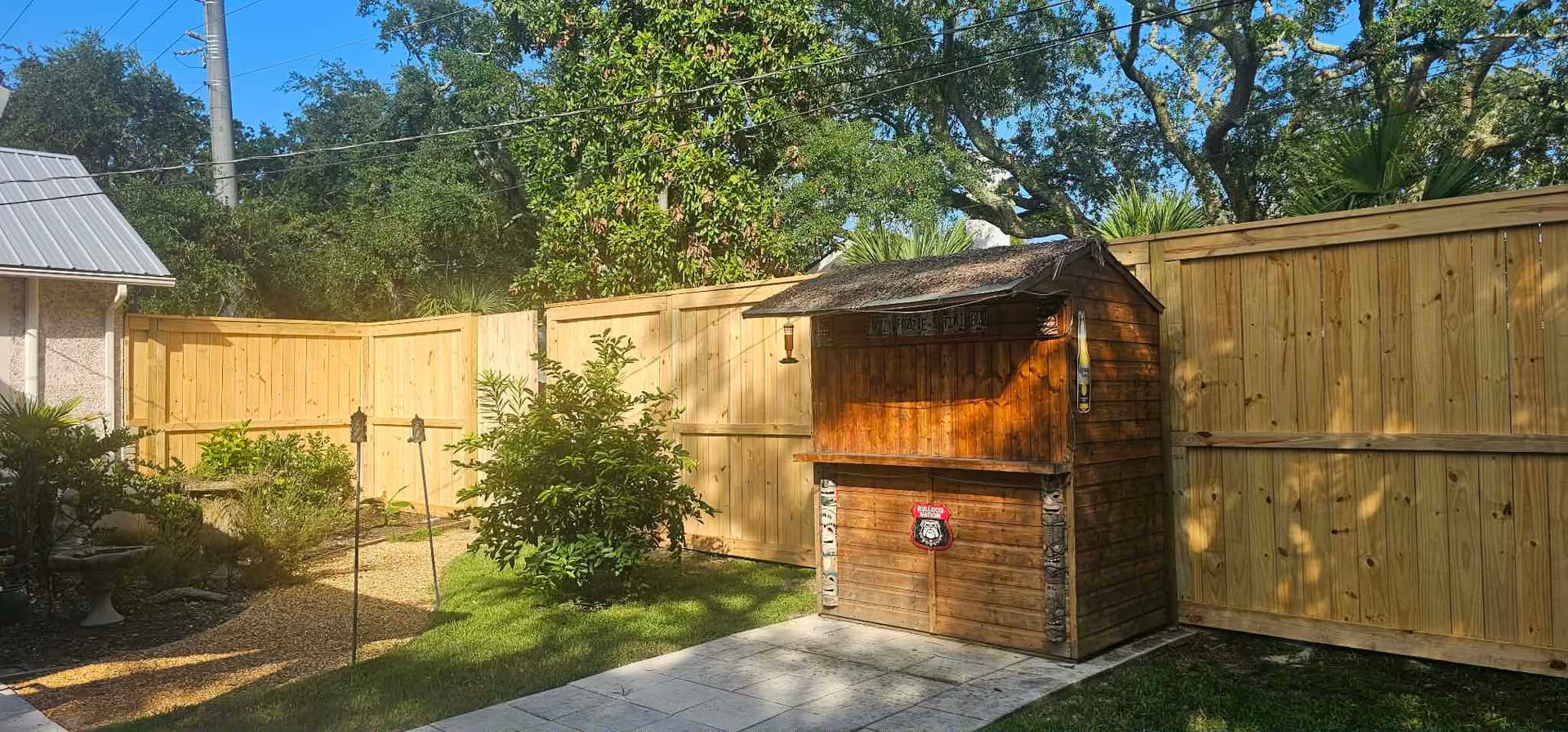
Wood looks like wood. Because it is. It fits well under live oaks and Spanish moss. Weathering. Is that character or shoddy? You decide and maintain.
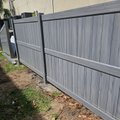
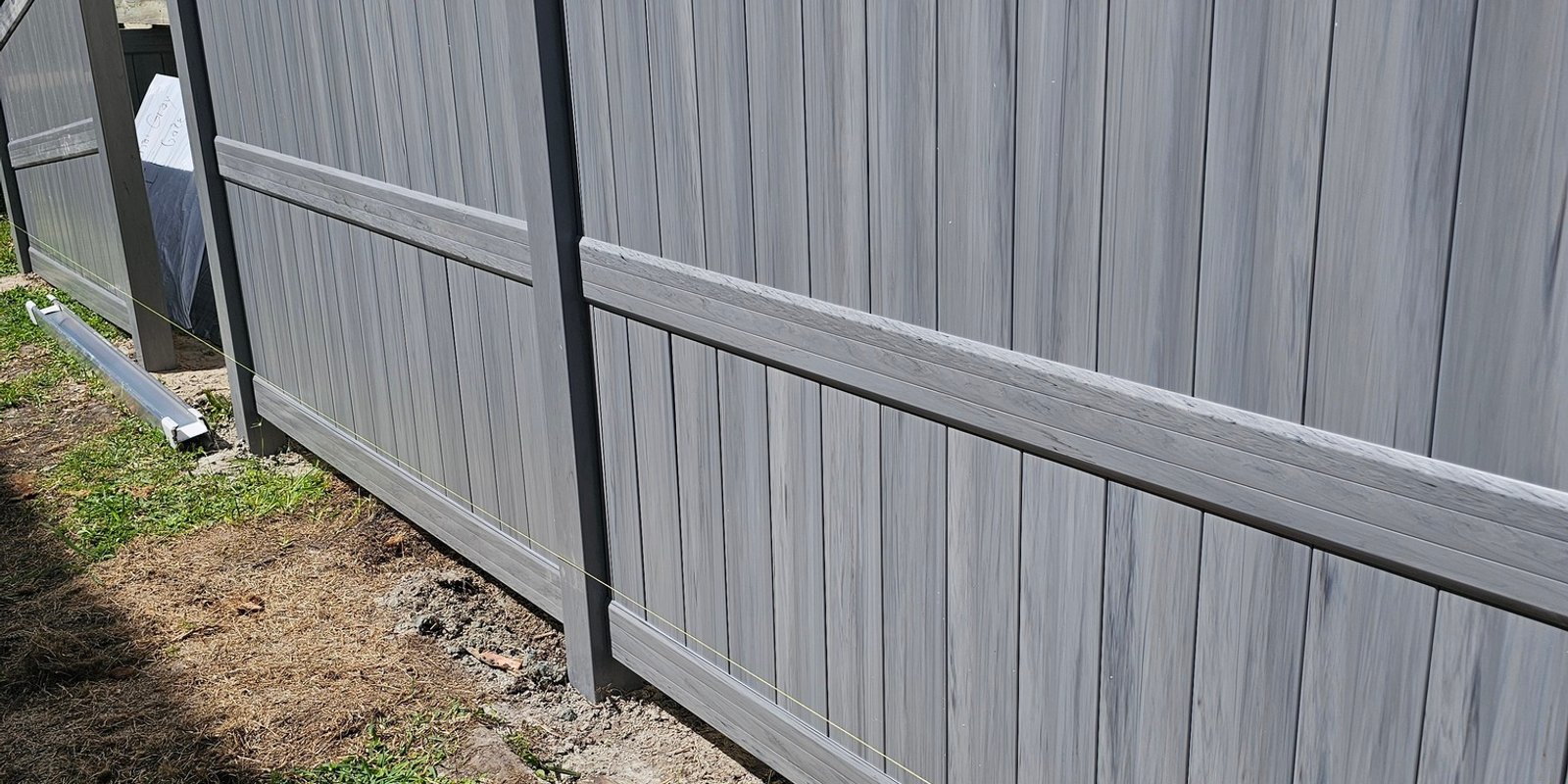
Vinyl is clean and remains clean. It looks like plastic when it's cheap vinyl. Quality vinyl, especially when tan or gray or wood grain, looks like a well maintained fence. Never gets character. Some want it and some miss it.
Aluminum looks like architecture. It fits well around a pool or a marsh line or across a frontage. It looks deliberate. Looks expensive. Because it is.
Storm performance
Hurricane season is June through November. This is where the real differences in the materials come in.
Aluminum is king. The wind just goes right through and there's hardly any load to resist. The aluminum fences have routinely come through storms that destroy solid ones.
Wood is a big sail, but a sail that fails in a gentle way. Boards come off. So there's pressure relief there. Also most of the time you can repair a wood fence if it's damaged, board by board.
Vinyl is the most completely enclosed surface of the 3 and therefore it picks up the most wind. It's also likely to fail in panels, not individual pieces. With a properly posted vinyl fence, it stands up to the big weather. With a poorly posted vinyl fence... well that's the standard post-storm call-out.
On a solid fence in an exposed lot... it's all about the posts. We deal with this more than we'd like in our fence repairs.
Salt air
Ranked out right. Aluminum: indifferent. Vinyl: indifferent. Wood: vulnerable, but more the hardware than the wood itself.
Coastal wood fences will fail on the fasteners first. You need to use hot dip galvanized as a minimum or if you can use stainless. Electroplated screws will rust up, black streak the boards and fail.
Look out here. Black steel, wrought iron ornamental fencing, looks like aluminum. But it will rust up bad here. If you want ornamental on this coast, it needs to be aluminum. We cover that on our page for aluminum fencing.
Repairability
Wood is the most repairable thing by far. If you break the board, it's a board. If the post is leaning, you can often reset it. Anybody who's a carpenter can fix it. You can get materials everywhere.
Vinyl is replacement instead of fixing. At the panel level. If you have a product line still available, then quick and clean. If you have some obscure product 15 years from now, then awkward. If you get a mainstream system, and have space, buy a spare panel.
Aluminum seldom needs anything, but if it does, swap sections.
Dogs, pools and other specifics
Dogs. Wood and vinyl contain anything. Standard aluminum spacing for pickets will allow small dogs to pass through. (You need puppy pickets to take care of this, but it's additional cost and you need to spec them up front).
Pools. Aluminum, pretty much always. Safety requirements for pools are non-climb, self-latching and self-closing see-through, permanent resistance to chlorine and salt. You need to check with Glynn County Community Development for the latest on what you need before you build. (This is not an 'I would like this'. It is a safety code.)
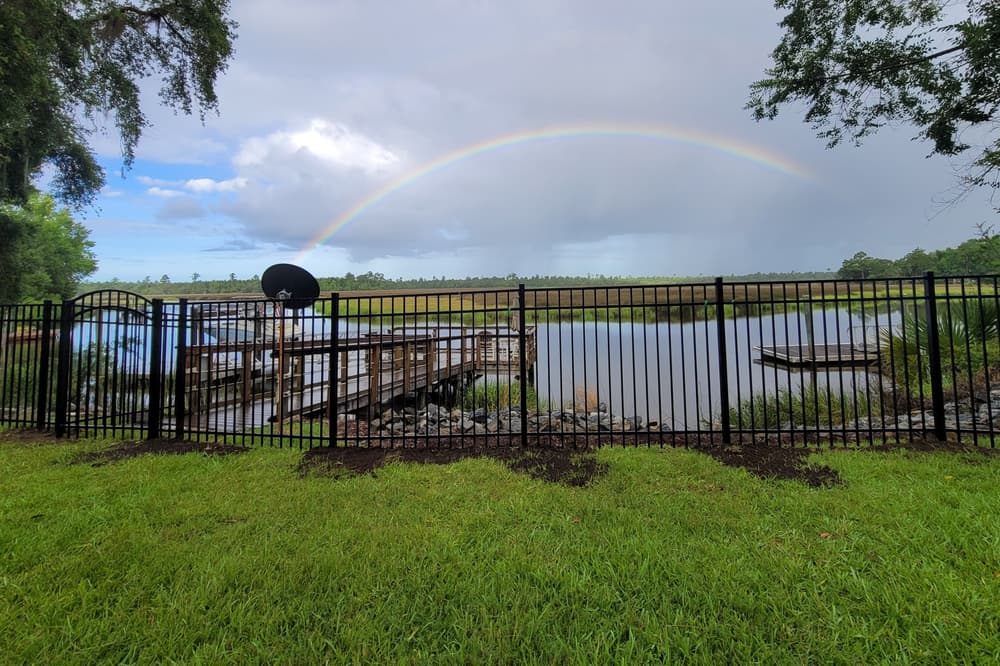
Views. If your lot overlooks marsh or water a solid fence will turn your best feature into a wall. This is the single most common thing we manage to talk owners out of.
Acreage. None of the above. If you are talking big you're talking field fencing. A whole different economy.
So what would we put in
Wood 6 foot ground contact posts. Galvanized or stainless hardware. For a budget and dog for a typical Brunswick subdivision lot.
Vinyl (quality system) with proper posting for an owner that has already replaced a wood fence once and is over maintenance on a typical Brunswick subdivision lot.
Aluminum, not much hesitation, for a marsh front, water view, around a pool, anything that is truly windy.
More important than what it's made of, for all the above lots is how deep the posts are, how far apart they are, concrete, the metal the fasteners are made of. We've seen good materials fail with a poor install and decent materials going 20+ years on a good install. See the best fence material for coastal Georgia for more about selecting for our climate.
Get a second opinion on your own lot
It depends on your exposure, your view, your neighbors, your dog and how much you hate a sanding block. We'll come look at your property and tell you what we'd put in if it were ours. Then, we'll give you a quote on the one you want.
Ask for a free quote or give us a ring at (912) 674-0619. For more info on where we work check out our Brunswick page.