Call us (912) 674-0619
 goldenislesfae@gmail.com

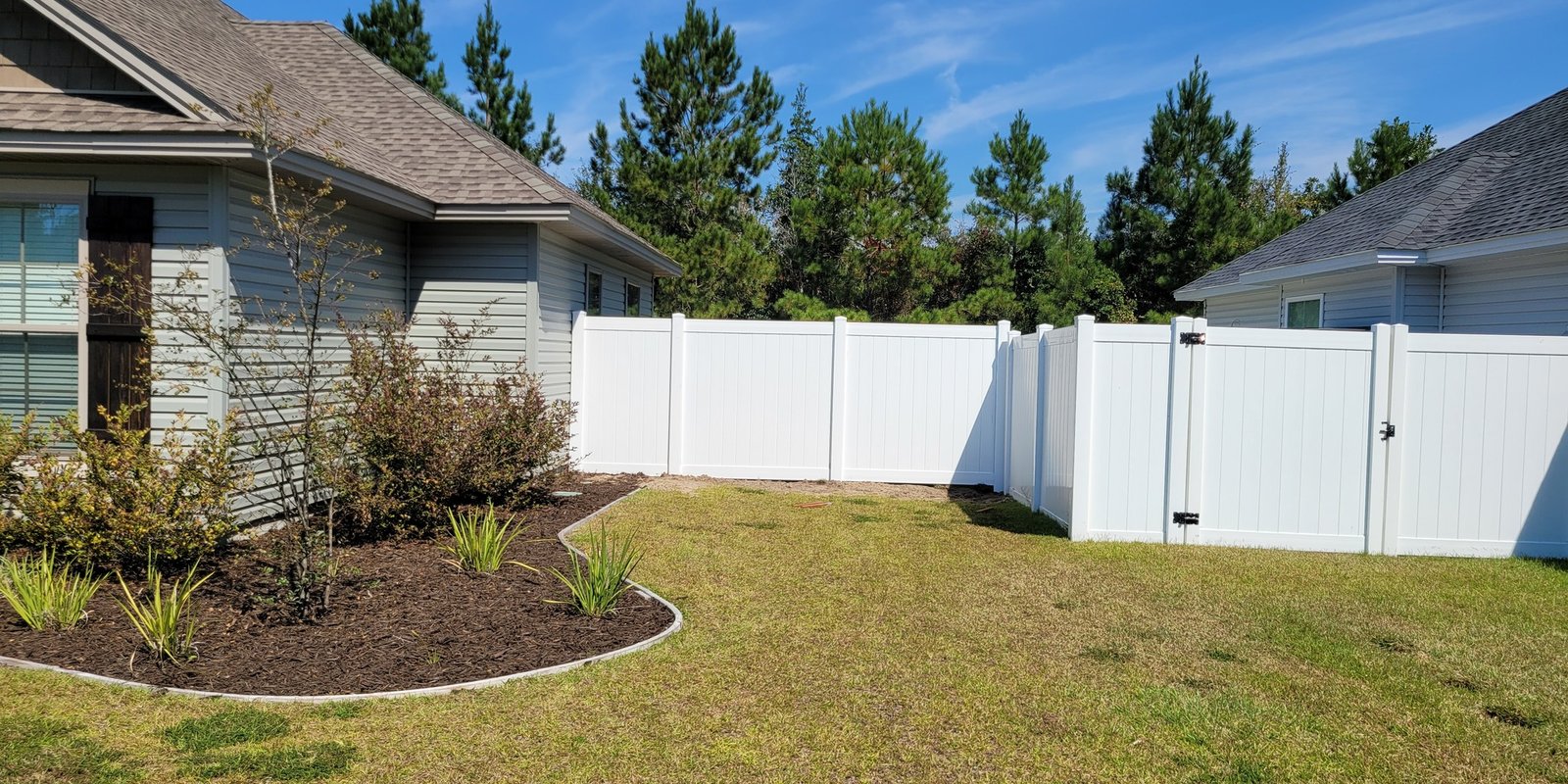

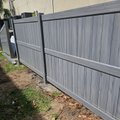
Vinyl is the fence you get when you've had a wood fence and are sick of it. It's the more expensive one up front, and then it's one that pretty much requires nothing from you afterward. The salt-air coast makes that a bigger selling point than in the landlocked areas.
Also it's the one with the biggest difference between a quality product and a cheap one, and it's the hardest to convey with a picture.
The working range
Right now you can figure a ballpark of $35 to $60 per linear foot installed for a typical 6' tall vinyl privacy fence around the home in Brunswick. Of course that's a plan number and your specific site conditions will move that number around. (Premium panels, tough site, multiple gates can make it a higher job.)
In our general fence cost guide for Brunswick, vinyl is generally running 30% to 50% higher up front than the same (in terms of style) wooden privacy fence.
Why vinyl prices vary so much
Every single vinyl fence out there looks like it's made of white plastic on the listing. It's not.
Wall thickness It's the big one. The more substantial a panel, the more PVC in it, and the more expensive it was to make. If a panel is thin and hollow feeling, it bends. If a branch or a football hits it, it cracks.
Virgin versus recycled content It matters. The more regrind is in the panel, the cheaper and the more brittle it is.
UV inhibitors and titanium dioxide These are the things that prevent vinyl from chalking out and yellowing in Georgia sun. If they skimp on these for a cheap panel, you'll notice in about 5 years that the fence is dull and has a bit of yellow in it. It's unrecoverable.
Reinforcement. The good ones have aluminum or steel inserts in long panel bottom rail and in gate frames. Rails sag without it.
You do NOT want to be buying at the bottom of the market for this. A quality vinyl fence is approaching a lifetime fence. A cheap one is a 15 year fence that's tired at 8 years old.
Style
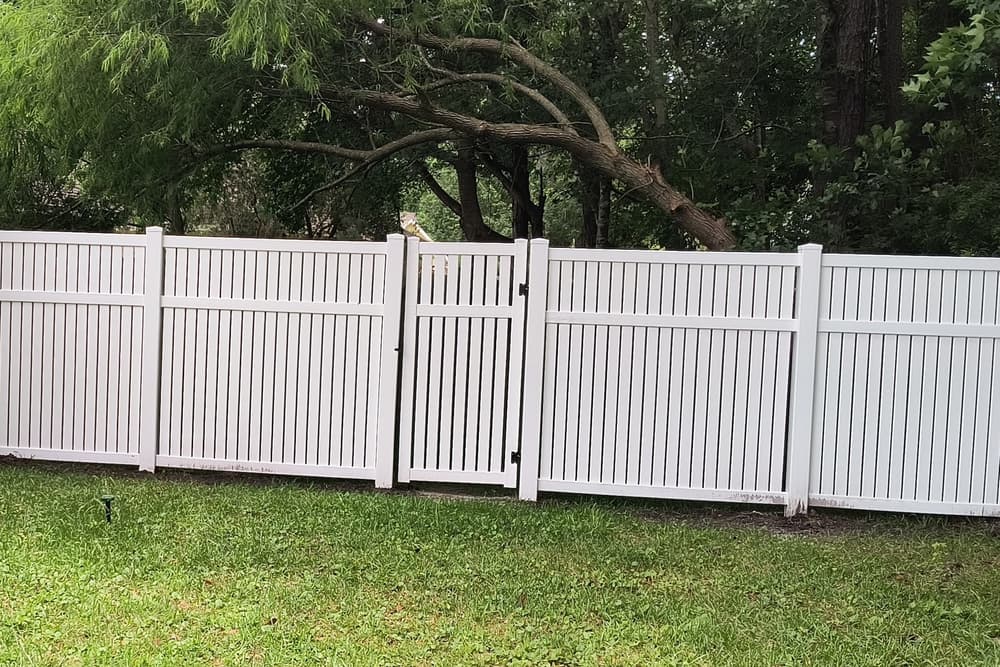
- Solid privacy: 6ft tongue and groove, no gap standard.
- Semi-privacy: lattice or spindle or picket with spacing for air and light (important in some coastal exposed lots)
- Picket: 3-4' front yards, and decorative borders.
- Ranch rail: 2, 3 or 4 rails acreage, frontage. MUCH cheaper per ft as there is so much less material.
Also cost factor is color... White is volume and least expensive. Tan, khaki, gray, wood grain (wood grain finishes are most expensive sometimes by a lot), cost more.
Gates
It's not just putting a panel on hinges. It's got to have a frame that's reinforced or it will sag to be a parallelogram in a season. Good gate kits come with metal inserts for the frame and the hardware needs to be able to hold the weight.
You can expect a few hundred dollars for a walk gate. For a double drive gate a lot more since those posts on either side are bearing the entire load and likely will have bigger footings.
What the coast does, and does not, do to vinyl
The good news is a lot of the list. PVC won't corrode from salt. It won't rot from humidity. Termites and carpenter bees leave it alone. It doesn't have to be painted or stained or sealed. A garden hose takes care of the green film that grows on everything around here.
The two big things:
Wind. A solid privacy vinyl fence is completely impervious. It takes all of the blow from a squall. The stress is in the posts. That is the failure mode during hurricane season (June through November). A well engineered vinyl fence can handle that. An under-posted fence can't. Some people on exposed lots purposely use semi privacy panels so the wind blows through.
Impact in cold. Vinyl is not so forgiving in truly cold weather. We don't have much of that here. That's one of the reasons vinyl works so well here on the coast.
Posts and soil
With all the fences here, life expectancy is determined by the install.
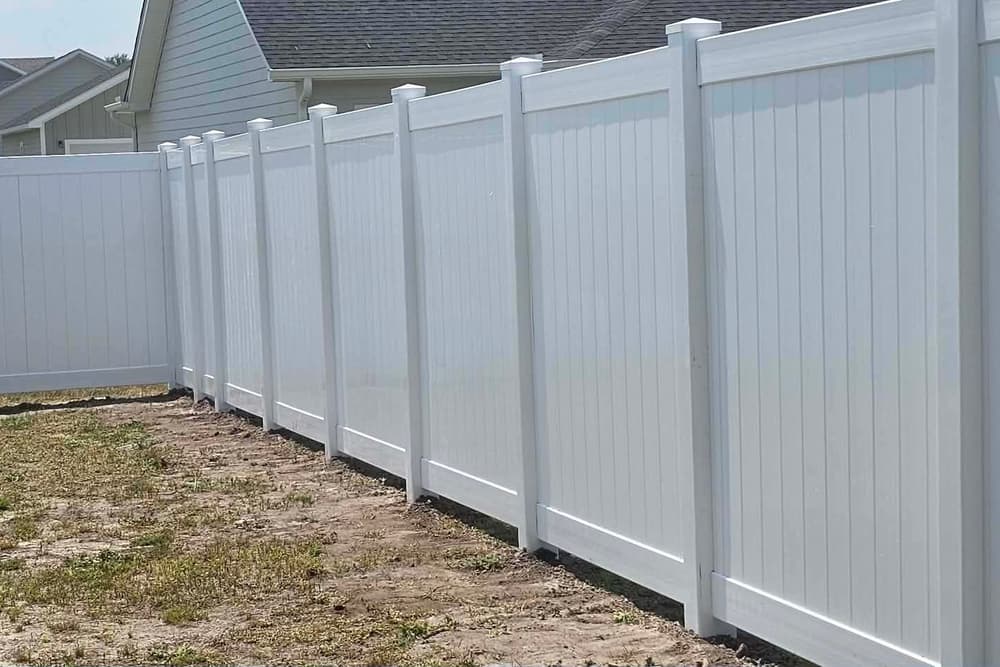
Vinyl posts are sleeves. They go into concrete. Usually they are filled with concrete too to stiffen them. The amount of concrete and the depth of the hole in sandy (near water) soil or heavy clay (inland) is not an area to be cheap. If your lot is low with high water table, you want the proper hole work so the footing doesn't go into standing water.
The fact that you can't sneak up and quietly straighten a vinyl fence as you could a wood fence means that, more so than a wood fence, the post install must be correct. The first time around.
Repairs
You don't repair vinyl. It's replace. So if you have a cracked board you have to replace a panel section, not just a picket. Pretty quick and clean if it's something that's still in production. Not so great if it's something obscure and you bought it a decade ago. More of an argument for mainstream quality vs bargain though.
Even with quality vinyl it's never going to match perfectly when replacing a panel to account for 15 years of sun. Quality vinyl will fade much less than cheap vinyl though.
We do fence repairs in vinyl too... like wood. It's not a bad idea to keep a spare panel in your garage if you got the room.
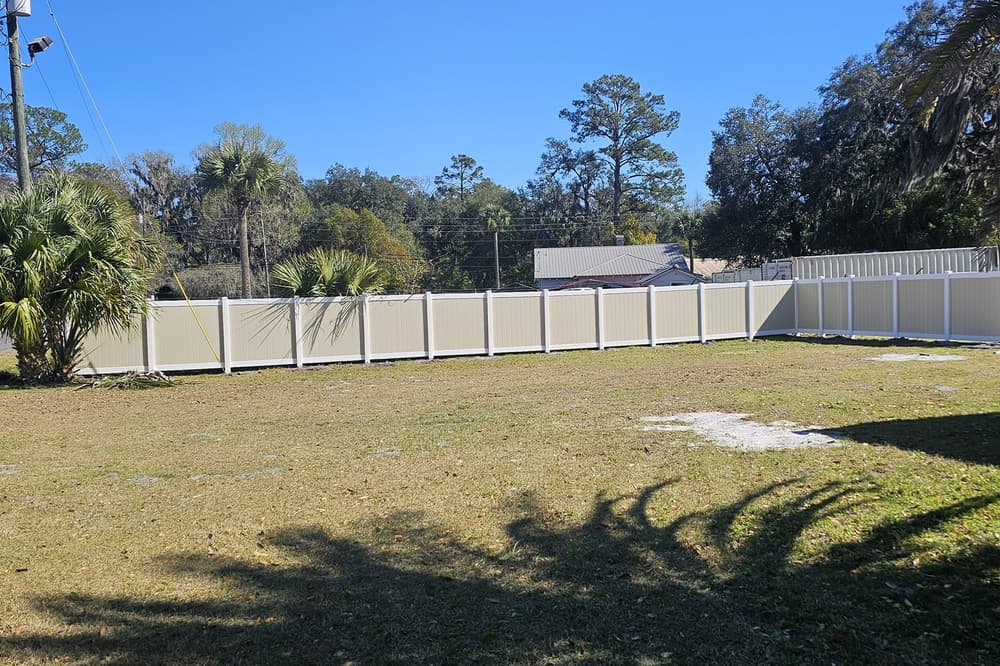
Is it worth the extra over wood
Use fifteen years on that instead of the quote.
Wood fences are cheaper up front but want you to clean and seal them every few years, and replace some boards from time to time and finally some post work. Vinyl is more expensive upfront but wants you to hose. If your lot has salt spray then the case for vinyl is even stronger. No fasteners that will corrode and no wood that can hold water.
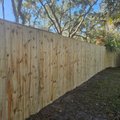
If you want the look of wood and the warmth of wood then you should go with wood and there's no argument. Check out our wood fence cost guide and wood fencing page. If you want a fence that you forget about it's vinyl you want.
As a comparison across all materials on this coast check out the best fence material for coastal Georgia.
Getting a quote that means something
How many feet is your run? What style? How many gates? What specific panel system are they quoting? A quote that says "Vinyl fence" doesn't mean anything. A quote that says specific product line and thickness means everything.
We install vinyl in Brunswick, St. Simons Island and Jekyll Island. For style and color options see vinyl fencing.
Request a free quote or call (912) 674-0619 and we'll show you the difference of panels in person. That's the only way it makes sense.