Call us (912) 674-0619
 goldenislesfae@gmail.com

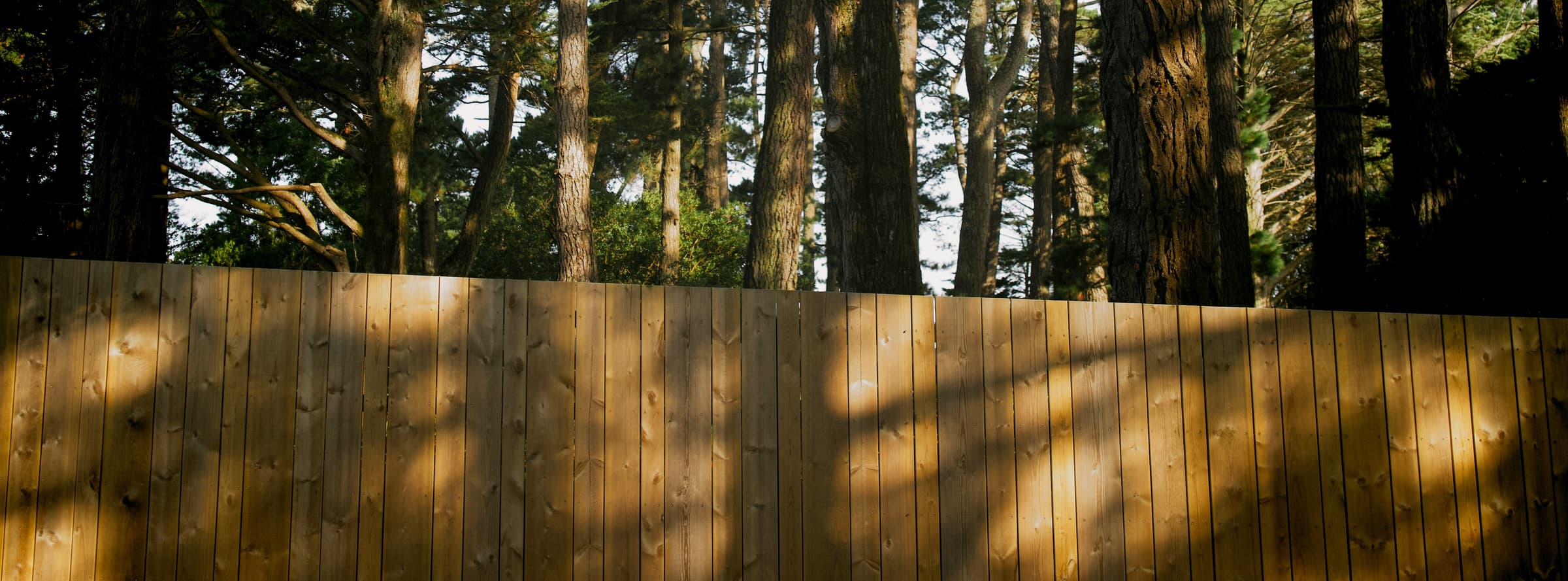
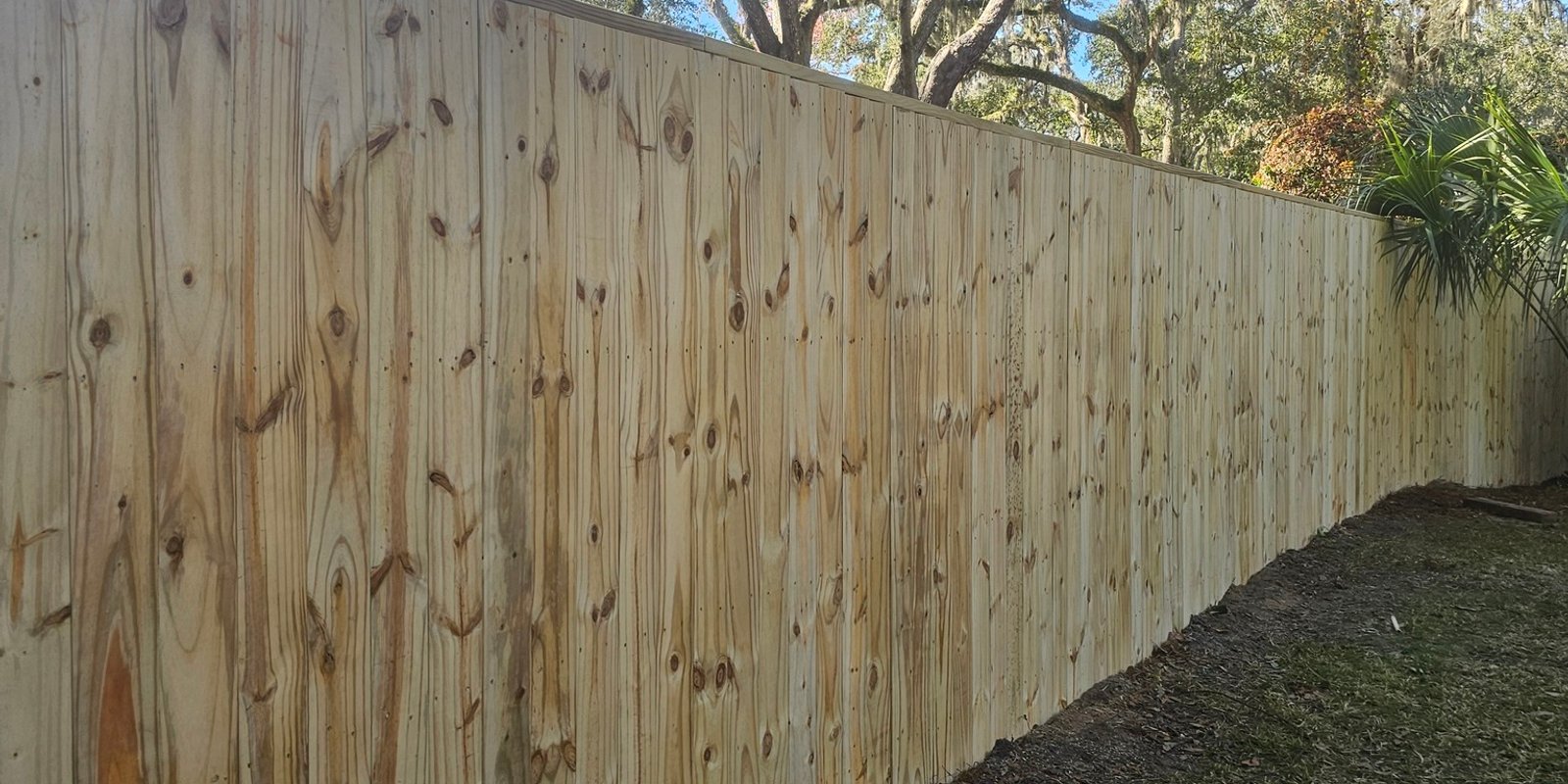

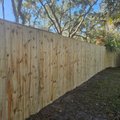
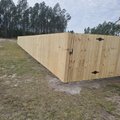
A wood fence is still the most popular style down here. Also the style with the widest swing. You can get two wood fence quotes, that are both legitimate, where the difference in cost is almost double per foot. The problem is that "wood fence" can mean a dozen different things.
So, the real answer is....what's behind that number.
The working range
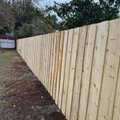
As for the basic six foot pressure treated privacy fence (average job Brunswick area), you will be looking at around $25 to $45 per linear foot installed. This is a ballpark figure, not a price. Where you fall in that range will be based on your location, etc. Also, your job may fall outside that range if it is an odd job.
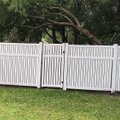
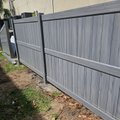
Here's a general comparison (vinyl, aluminum, wire, etc.): what a fence costs in Brunswick.
Wood species
Pressure-treated southern yellow pine by default. Should be. Grown regionally. Accepts treatment well. Strong. Economical. For just about all the wood fences we construct, we use treated pine.
Western red cedar Significantly more money than pine (often 40% to 70% more for the material). Naturally rot resistant. Dimensionally stable. Weathers a nice silver-gray that a lot of folks like. If you're on the coast, then cedar is not a vain choice. It's actually an improvement (as opposed to using pine) for the coast. But it's not required.
More important than the wood species: ground-contact rated treatment on anything entering the soil. It's a waste of money to use non-ground contact (above ground) rated posts in moist coastal soil. You see it year six.
Height
Height is nearly a linear function of material.
- Four feet: picket or semi-private, front yards, decorative boundaries.
- Six feet: standard privacy height, the vast majority of what we build.
- Eight feet: much more expensive, not just 33% more, per foot. More material in the rails (taller board), more material in the posts (heavier rail, posts deeper and often wider to cope with more wind load). Do your homework before you plan on it based on your local height restrictions. (See our article on fence permits in Glynn County)
Style
Here's where quotes will vary the most.
- Dog-ear stockade: butt boards side to side, cut corners off. Cheapest way.
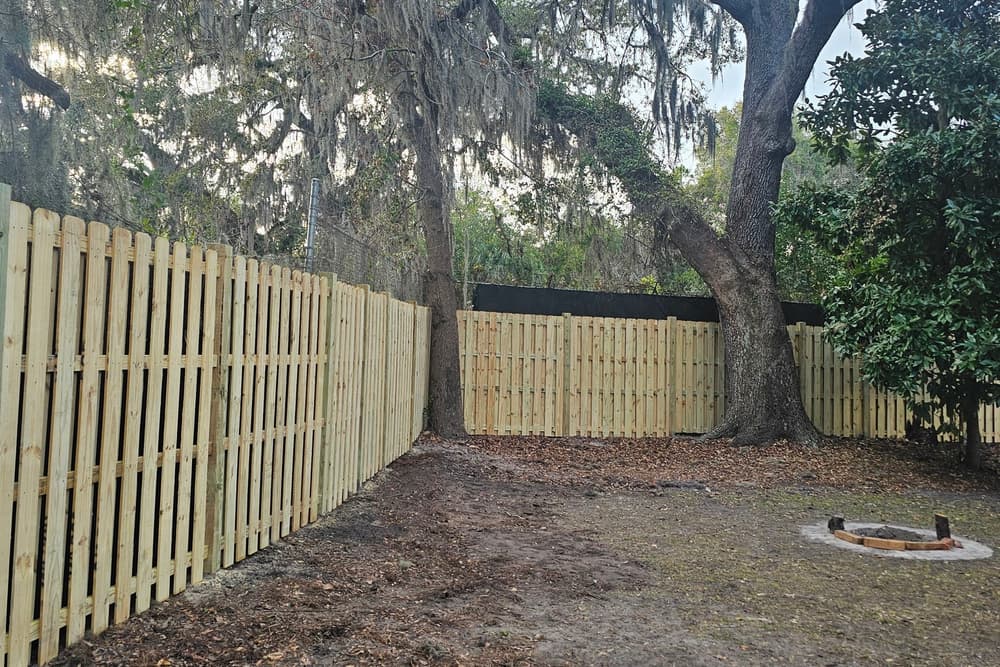
- Board-on-board / shadowbox: alternate the boards across the rails. This makes it nice from both sides of the fence. Some air flow. This is more timber. Typically 15% to 30% more than stockade. Common on corner lots or anywhere the neighbor is likely to view your fence just as much as you do.
- Privacy with lattice or a decorative top: more height and detail. More expense.
- Picket: less material per ft than privacy. More labor per picket. Often ends up costing closer to privacy than people think.
- Capped and trimmed: trim board and a top cap rail. Big visual difference. More timber and labor.
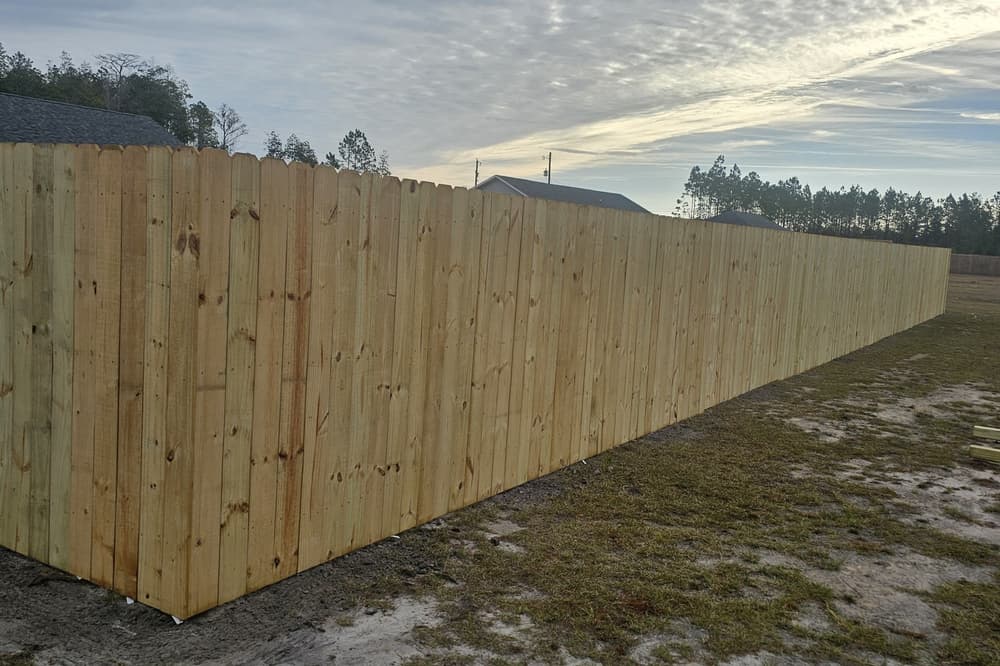
Posts, and why they are the whole argument
It's the "you can't see it" part that determines the lifespan.
Fencing for us, the coastal areas are sandy out near the water, and heavy clay the further you go in. Neither are ideal. Sandy soil lacks lateral resistance so you'd rather go deeper for your posts. Clay will hold water up to the wood. Sometimes with low lying, marsh edge lots the water table is shallow enough that you'll be digging post holes and water starts to fill the hole in the process.
Good installs have posts at a third of the above ground height of the post below the ground, in concrete. Belled, or sloped post holes that direct water out instead of letting it sit. Posts every 6-8'. Don't stretch to save one post hole.
Some installers go with all 4x4 posts. Some use 4x6's or steel on the gate spots and corners. This isn't a visible part of a final photo, but it's most definitely visible in a quote. Ask about that.
More about the way we build them here: wood fencing
Hardware
Salt air is the local tax. Electro plated screws rust. Streak the wood black. Let go. If you use hot-dipped galvanized fasteners... that's the minimum on this coast. If you want better... there's stainless. And it costs more.
Gate hardware... hinges and latches. They move. They'll be the first things to fail. If your gate is big... a cheaper latch on it will fail within a couple of seasons.
Gates
Each gate costs. And a big one costs a lot. A normal walk gate is only a few hundred bucks to add. A double gate for a drive that's big enough to get a truck or trailer through is going to need larger posts, probably concrete footings for the load, bracing to keep it from sagging and so forth, and big hardware. You could easily end up with 4 digits worth of cost just for the gate.
Figure out how many gates you actually need. Often people will have two, which makes sense. Four gates often means they're not thinking.
Site conditions
Things that push up the range:
- Access. No truck access, everything is carried. Full labor.
- Roots and obstacles. Live oaks and old pine stumps, and underground construction materials will slow down post hole. Some jobs will require fence line land clearing to start.
- Slope and drainage. Glynn County is generally flat. This helps. However, if you have to cross a swale or step down a bank. Add $. If the ground won't support a straight shot, grading first.
- Removing the old fence. Hard work. Especially if concreted posts. Make sure removal and haul away is part of the quote.
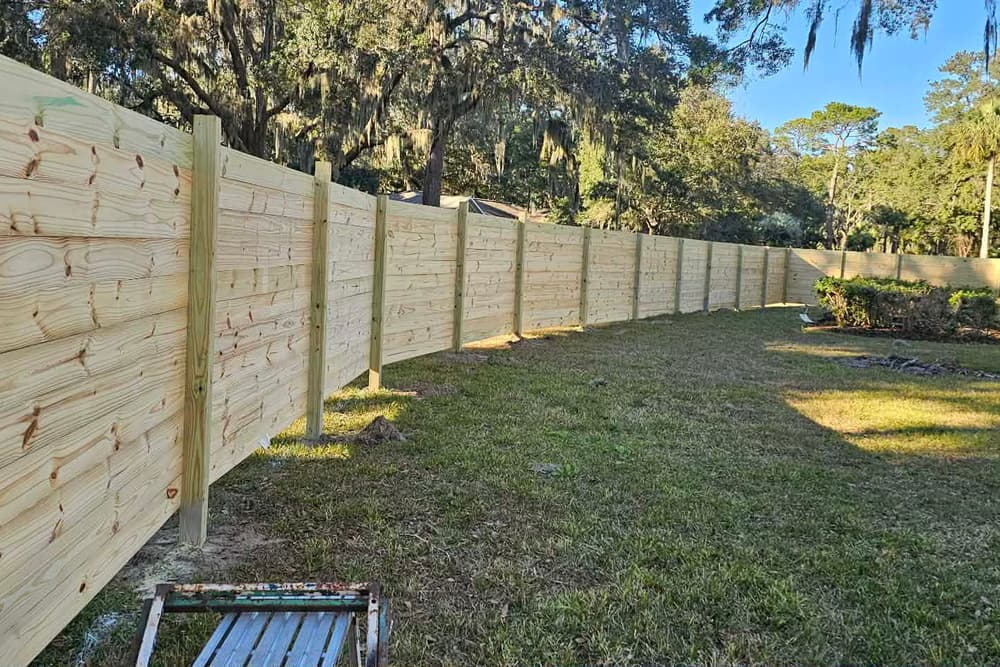
What wood costs you after installation
Wood is the only thing that has a real ongoing cost. Expect to have to clean and reseal it every few years. More often if it's exposed to the sun and salt (if that's the case in the run). Expect to have to replace boards occasionally.
But that's why wood's good too. It's repairable. When it's damaged, it's repairable. You don't replace a panel. You replace the board if a board cracks. The ability to repair over the life of the fence is worth a lot and explains why wood fence repairs are generally easy to make.
If you know that you won't be doing the maintenance, make sure you look at the cost of vinyl fencing compared to wood before you make your decision.
Getting a real number
Make a perimeter measurement. Choose height & style. Be realistic about your gate count. Have a person walk your lot. What moves a wood fence bid is the ground. The access. The gates. You can't get any of those from the sky in a satellite picture.
We do wood fences for Brunswick, St. Simons Island, Jekyll Island and into the outlying counties. Check out the wood fencing page and the Brunswick area page for more info.
Ask us for a free quote or call (912) 674-0619 and we can tell you a price & where you can save some.