Call us (912) 674-0619
 goldenislesfae@gmail.com

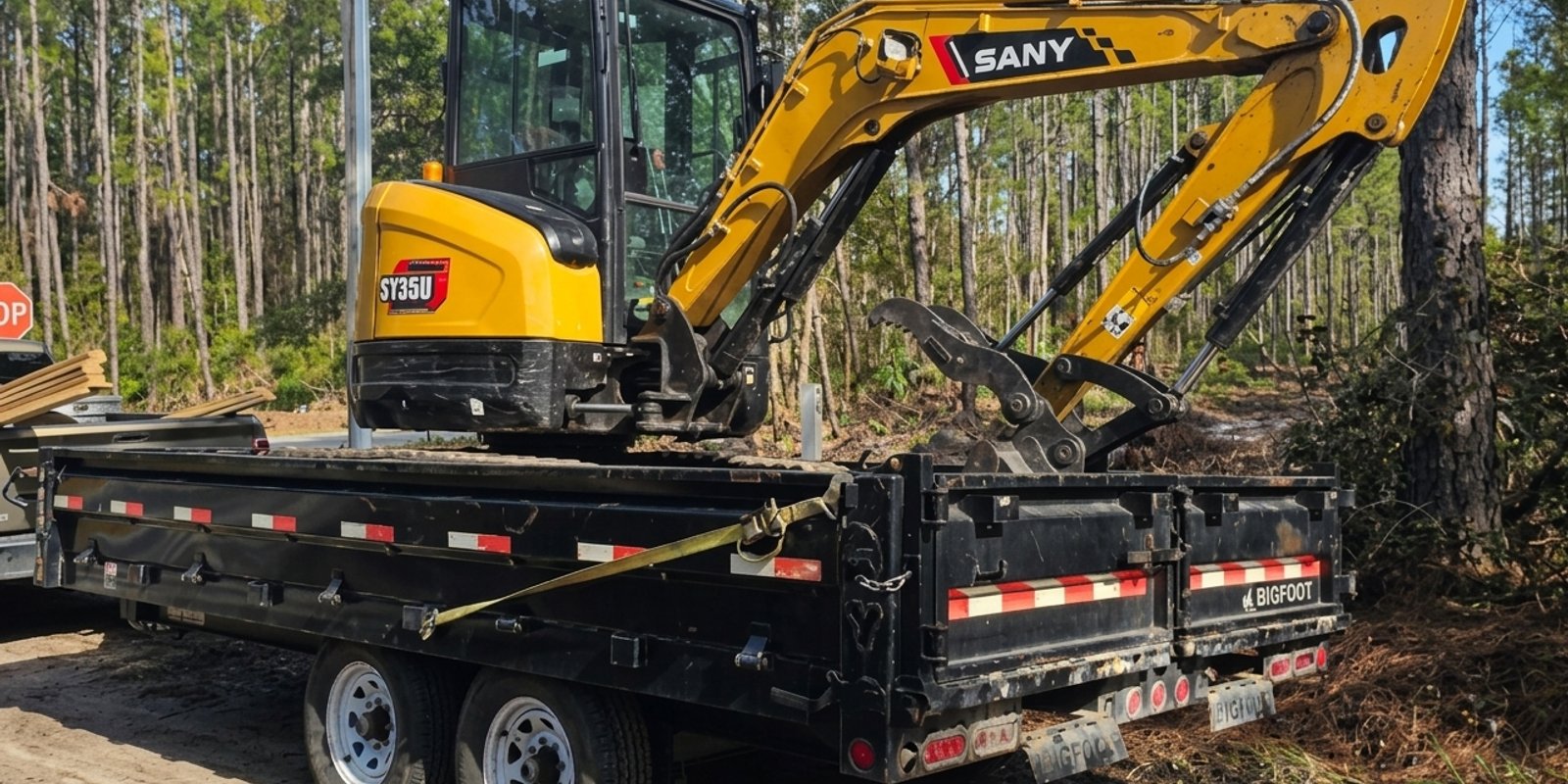

The hardest one to quote from a description is the land clearing as it could be a factor of five difference between two acres a mile away. It's more dependent on what's growing on it, what's under it, is it accessible by machine than anything else. Size isn't as important.
To give you an idea as to the numbers and where you may be on your property before someone walks it, here is the driver for that number.
The working ranges
Very general budget estimates in this area (per acre)
- Light clearing: Very open brush, scrub, small saplings, no big trees. Good access. $1,500 to $3,500 per acre
- Medium clearing: Pine planted or mixed growth. Trees not too dense. Stumps taken care of. $3,500 to $7,000 per acre
- Heavy clearing: Dense mature hardwoods. Big stumps. No real access. Boggy. $7,000 to $15,000 per acre and more for difficult spots.
Think of these numbers as starting points. An acre of thick hardwoods, no road, with a soggy corner can exceed 5 acres of open pine plantation by the side of a highway. Selective cutting, where you want certain trees left behind, costs more on a per-acre basis than clearing the slate. A machine can't just 'do it'.
What moves the price
Pines versus hardwoods
Single biggest vegetation factor.
Planted pine Easy. A lot of this around here. Regular rows. Straight trunks. Fairly shallow root systems. Predictable timber. Machine can be efficient.
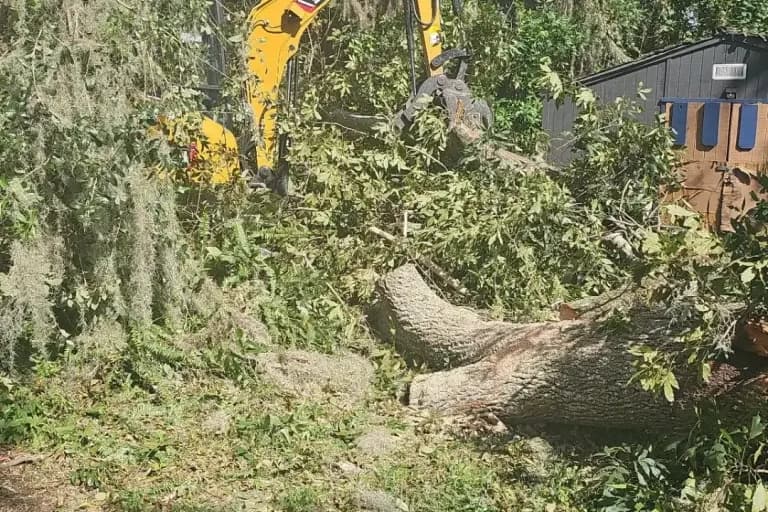
Mature hardwood (live oak, water oak, gum): another matter. Larger trunks. Large sprawling crowns. Heavy limbs. Root systems can be a pain to remove the stump. Really can be a pain. Especially the live oaks. They're huge, dense and slow.
Palmetto scrub Must mention. Appears easy. But is not. Those palmetto root mats are dense, fibrous, stubborn. Takes real time to do it right.
Stumps: grind, pull, or leave
This is a huge costly decision. It all depends on what you are doing with the land.
Leave them: cheapest. Good if you are going back to pasture or timber land and will not be cultivating the soil.
Grind them: chip the stump down below grade and fill the hole. Good for most anything. Puts organic material in the ground.
Pull and remove them: pull all of the root ball out and get rid of it. Must do for building pad, slab, etc. where you need solid ground to work with. Most expensive. You get large voids that you have to backfill and compact.
If you are doing a build, you need them gone. You have organic material rotting in the ground under your pad and you end up with uneven ground after the fact. Do not skimp on this.
What happens to the debris
Often overlooked and it can be a third of the job.
Burning it's cheapest when you can do it. You need permits in Georgia to burn. There are certain conditions. Certain times of year. Before you set your course to do it check the current state of requirements with the Georgia Forestry Commission.
Chipping and spreading on-site saves haulage, and puts the organics back into the earth. Good for many uses but not as a building pad.
Burying on-site sometimes is okay. Often not a good idea for the same reason as stumps, settlement.
Hauling off Is most expensive, and sometimes the only option. In a small lot. Subdivision. Where you can't burn. Price is volume and distance. Cleared timber is bulky. See our hauling page.
Merchantable timber is the one that can work out. If you have sufficient good size pine you can sometimes offset some of the cost or more with a timber sale. There has to be sufficient volume and it needs to have decent access to be worth it for a logger to spend time on it, but always ask before anyone starts about it.
Access
How far do you need to go to get there? And can you get machinery there?
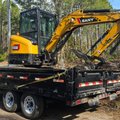
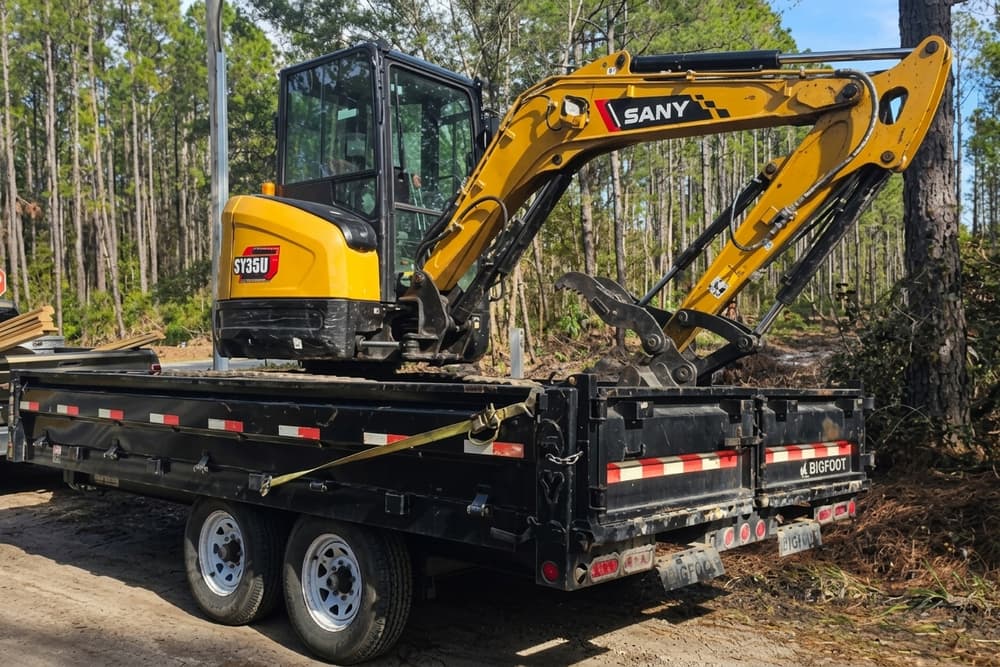
You get machinery on trailers. If you have a site that has a reasonable access off a public road, no problem. If you have one that only has a soft sand track or has a narrow gate or a low bridge. Or has to get to it via the neighbour's easement, that's a problem. You may need to construct an access to get to the site before you can start clearing. That's a line item in itself.
That's why you get a high per acre rate for a small job. It costs about the same to get a machine to site and then back again for 1 day as it does for 10 days. It's the mobilisation costs.
Wet ground and the water table
Well, a lot of it is flat, or fairly low-lying, and the water table can be close to the surface. Saturated soil doesn't make for great machine work. It bogs. It compacts poorly. It makes a mess that you have to fix.
A lot of the time, if it is a site that you would prefer to clear when it is drier, scheduling around that is a big challenge. If you have a part of your property that holds water at all times, that's not a scheduling issue, that's the next section.
Wetlands and marsh: check before anything moves
This is the one that can end up being more expensive than the clearing.
Georgia has laws in place that protect the coastal marshlands. Federal regulations are in place to protect wetlands in general. Not all wetlands are as obvious as some. It doesn't have to be "standing water". It can be jurisdictional. It can be scrub that appears to be like any other piece of ground.
Clearing a jurisdictional wetland without authorization can result in stop work orders, restoration demands, and penalties that will far exceed the worth of the work.
If you have anything near tidal marsh, creek, or ground that is often wet, it would be a good idea to check before you clear. The right way to go about it would be to have a wetland delineation done by a qualified consultant. Ask the appropriate state and federal entities what applies. We're clearing contractors, not a regulating entity. We'll always tell you to check first.
Also consider local permitting. Some clearings will require a permit. Erosion and sedimentation control will often be a requirement for larger disturbances. Check with Glynn County Community Development (or your county equivalent). See our post on fence permits in Glynn County to see the general conversation that will be had.
What clearing does not include
That's important to get straight. Clearing = getting rid of vegetation. Clearing doesn't give you a flat surface you can build on.
If you want the ground to have a certain shape, drainage or compaction, then that's grading. That's a different operation, with a separate cost. Clearing and grading is the normal order for a building site. The mistake people usually make is only budgeting for the first part of that.
Getting a real number
You can't get a price for land clearing from just an address and an acreage. You have to see the land. What is growing? What does the ground feel like? Is there any way to drive machinery in? Does anything look wet?
We do land clearing work in Glynn, Camden, McIntosh, etc counties. If there is a portion of your property that you will need to get a wetland opinion on before we can start working we'll let you know. Check out our page for land clearing. Also, for boundary work after land clearing see our field fencing.
Ask for a free site visit or call (912) 674-0619.