Call us (912) 674-0619
 goldenislesfae@gmail.com


The one thing in this trade that's not a matter of taste when it comes to rules, and where you don't want to get it wrong because the consequences are far worse than getting a violation.
Fencing your pool. This article will tell you what the general rules are for what a pool barrier needs to do. And which materials are appropriate for our climate. Note: it doesn't quote specific numbers intentionally. Because pool barrier rules are safety code. They are local enforcement, they change. Confirm the current requirements for your address with Glynn County Community Development, or your city, before you build anything. Before you build anything, make the call. First. Not last.
What a barrier is actually for
A pool barrier is intended to prevent an unsupervised small child from being able to access water. Everything about the requirements is derived from that single point and once you understand that the rules don't seem so arbitrary.
Basically to be considered compliant it needs to provide for:
- Height (not to get over it)
- Gaps below the barrier and in-between vertical elements (not to be able to get through it)
- Climbability (no horizontal rails or outside features that would act as a ladder)
- Gates (must be self closing and self latching with latch placement in such a way as a small child could not manipulate it. Also it needs to swing away from pool)
- The house (when part of a barrier is a wall of the dwelling...this usually prompts other requirements for doors and windows that open to the pool area)
That's your categories. As for the actual sizes that go along with it. You would get that in writing from the county for your address. Specific to the current code in force.
Why you cannot rely on what the neighbors have
3 reasons we commonly encounter them.
Codes change. A 15 year old pool enclosure could have been code compliant back then. But it might not be what is required now for new construction.
Existing does not mean compliant. Many enclosures weren't inspected.
Your situation may differ. A lot of factors matter. Is it an in ground or above ground pool? Does it involve a wall on the house as part of the barrier? Is there a spa? Is it new construction or existing?
There's also an even higher level than code. And that's your insurance company. Pools have a big impact on homeowners liability. Many insurance policies will have specific things they want for fencing. Tell them about the pool. Ask them what they want. It might be more than the county wants. And it's your insurance company that's going to deny the claim.
If you're in an HOA, you'll have covenants with their opinions on materials, colors and height that go over all of it. Check out our guide on HOA and setback rules.
Materials that work around a coastal pool
Where the pool is concerned, the barrier is in the worst spot on your property for a fence. Splashing all the time, chlorine or salt water, full sun, and salt air in the air on this coast, too. Other parts of your yard might be OK with a given material, but not in the area of the pool.
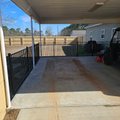
Aluminum: the default, and for good reason
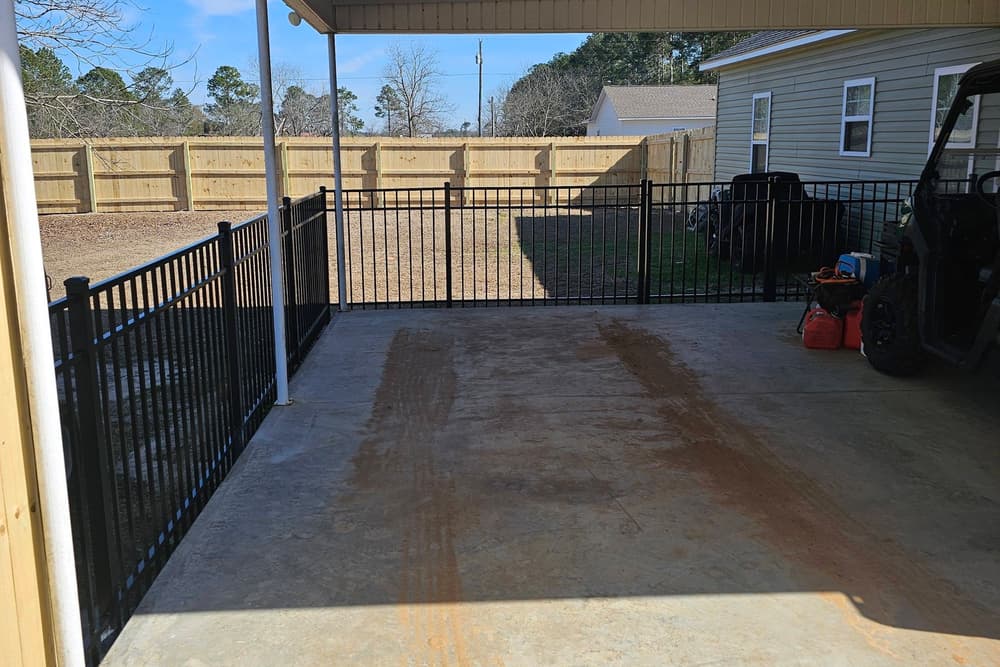
Most pool fencing on St. Simons, Sea Island, and in the Brunswick area is going to be powder-coated aluminum. It's hard to beat.
- No rust. This is really big since you have chlorine splash + salt air on it. * Transparent. You can see in it. If a kid is in the pool, you can see them from the house. This is safety, not beauty. * Open so the wind just blows through it. That's nice if you're in hurricane country. * Doesn't require any maintenance.
Now, what's really key is that the standard flat-top aluminum panels are supposed to be non-climbable (i.e., they have vertical pickets, not conveniently horizontal rails outside the panel). Now, there are panel configurations for pools specifically for this. Make sure to ask for them, don't just assume your standard residential panel will work.
More about the material in our aluminum fencing page. And price info in aluminum fence cost.
What to avoid: steel and wrought iron
They look practically the same as aluminum, and do completely different things in this environment. Steel will rust in chlorinated water and salt air. Once it gets going by raising the finish it gets worse. Ornamental means aluminum in Georgia, especially around a pool on the coast.
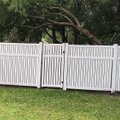
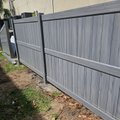
Vinyl
Vinyl is great with chlorine, salt and no maintenance. However solid privacy vinyl is opaque. So you can't see the pool from the house. It is not just a convenience issue. It is a real safety tradeoff. You can use vinyl pickets if you meet the spacing requirements. However you really need to be aware of climbability. The horizontal rails are bad.
You can use vinyl for property privacy boundary but it's a questionable choice for immediate barrier around water. See vinyl fencing.
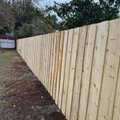
Wood
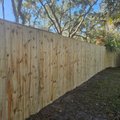
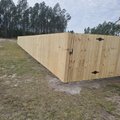
That is workable. Most high maintenance in the worst place you can pick for wood. Constant splashing, pool air, sun, not friendly for wood (or the fasteners). So if you're set on wood for your privacy, use it as a border to the property, but use aluminum as the barrier.
Mesh
There are removable mesh barriers. Many families like to have the mesh barriers, but want to be able to remove it from the pool area when the adults are around. It's exactly this type of thing you'll want to check with the county on, to see if the particular mesh system would meet your area requirements.
Layers, not a single line
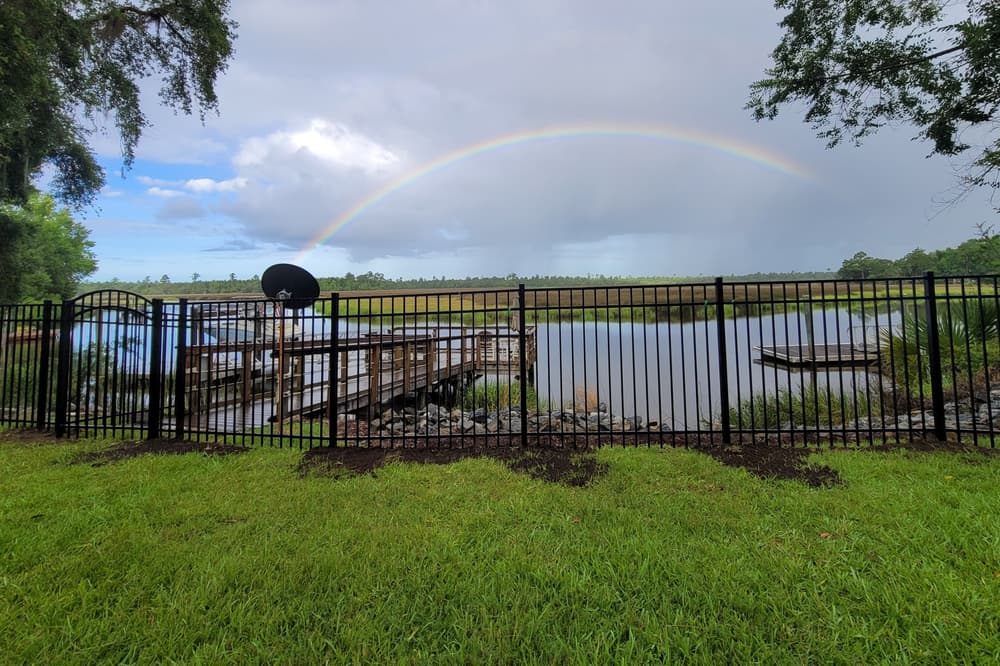
The safety experts who study this are always clear: Barriers break. Use more than one.
Primary is physical barrier. Then door and gate alarms, pool cover, self closing house door closures that lead out into the pool area, supervision. No one of them replaces the fence. They all help address its failures.
When you put something in make sure you regularly test the gate. With self closing hinges and self latching hardware you have mechanics that live outside in salt air and they seize. A non self closing gate is not a barrier. Put it on the list just like smoke alarm battery replacement.
Practical points before you build
- Ask the county first and get it in writing what is needed.
- Check with your insurance company, see what they need.
- Read HOA covenants.
- Determine where you are going to put the barrier. Generally it is less expensive to just fence in the pool and not the entire yard. Leaves you more room to use the other part of the yard. Plus now you have a clearly defined safe area.
- Position of gates should follow your use and understand that every gate is a weak point. The fewer gates the better.
- Utility locate before you dig. Like any fence.
We build these regularly
We provide pool barriers in Brunswick, St. Simons Island, Jekyll Island. We do whatever the county demands at the address. We'll walk the job with you and discuss where you would like the barrier to be. We'll put it in a material that's going to work in twenty years.
For more on our coverage in St. Simons Island, check the page. And we do pool project area ground work under grading.
Get a free quote or give us a call at (912) 674-0619. Put the county first and not last.