Call us (912) 674-0619
 goldenislesfae@gmail.com

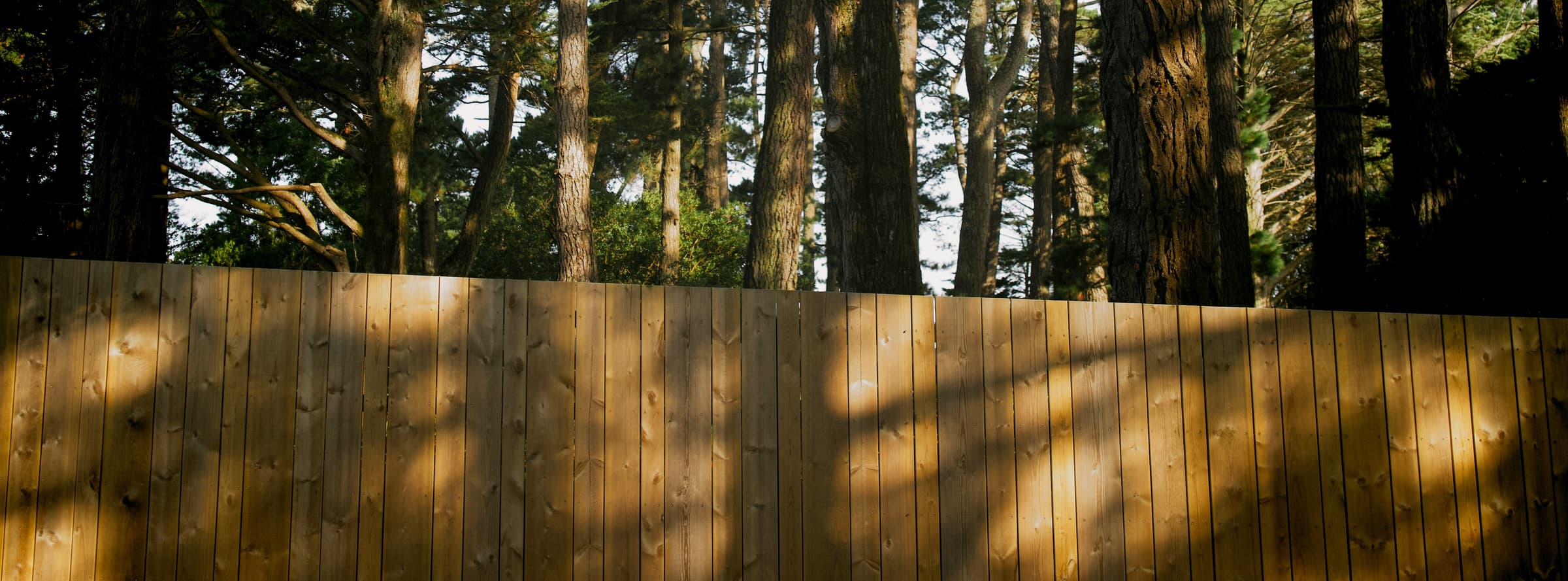
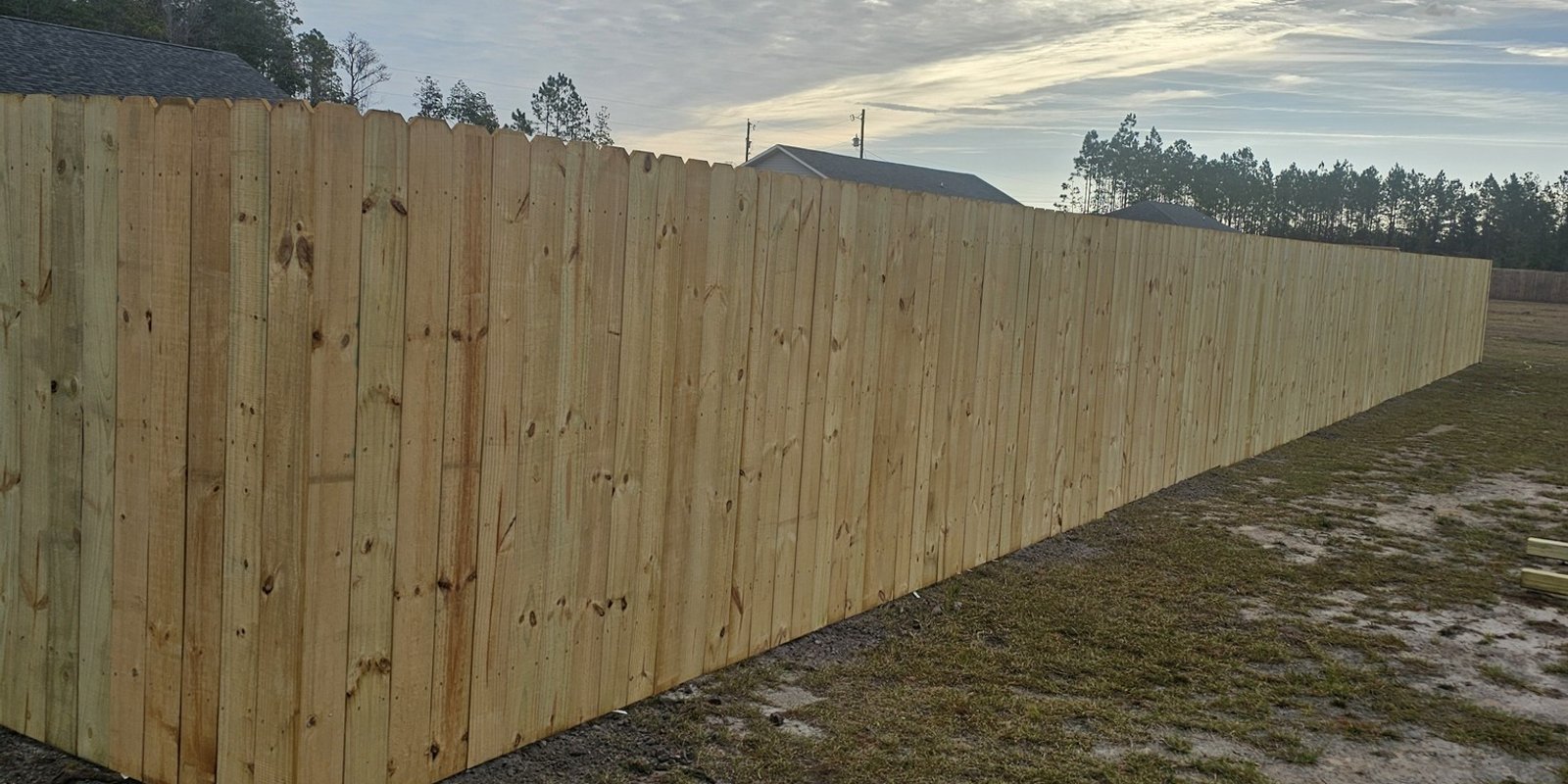

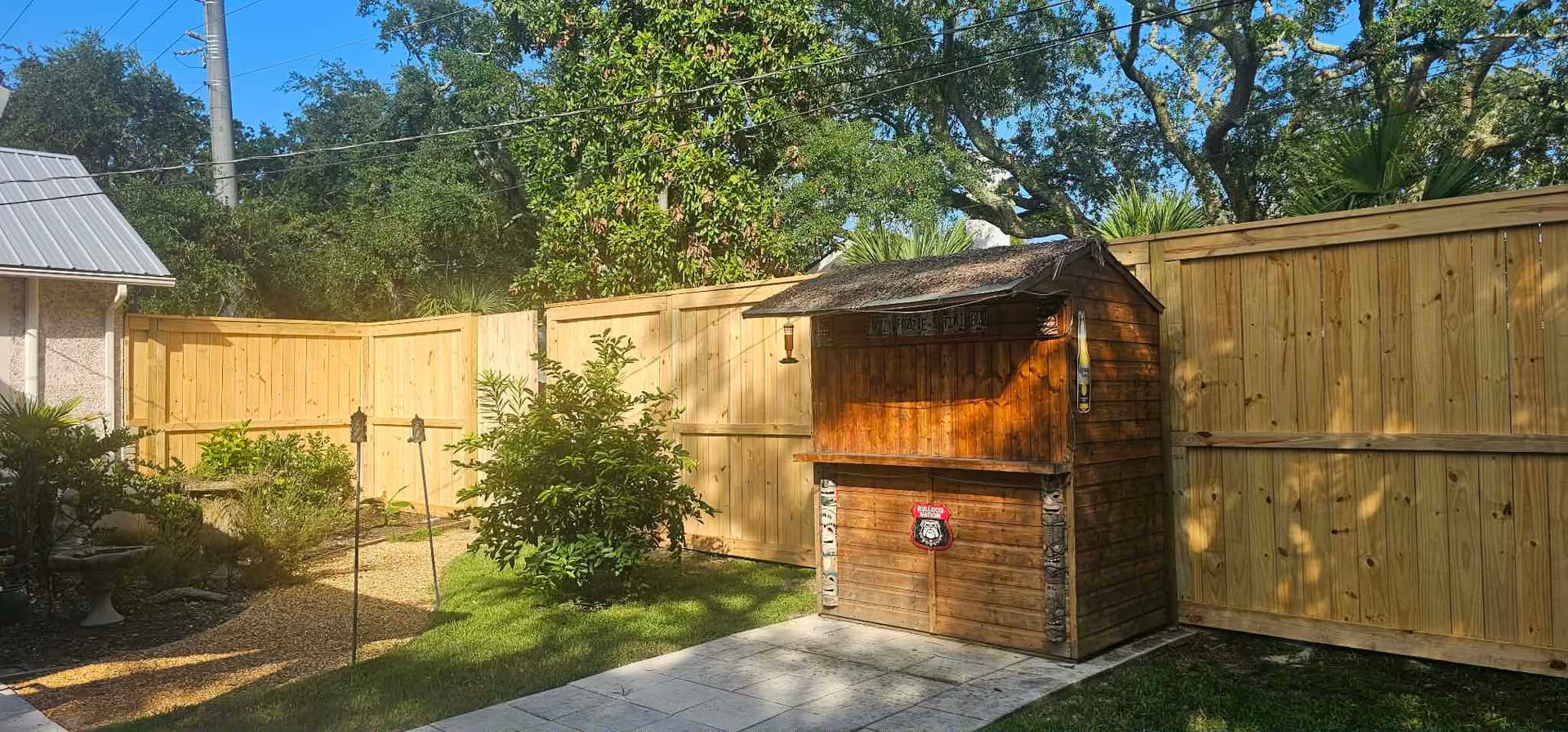
All those expensive fence issues can be traced back to these two careless choices being made in the beginning. Fence height & location.
Spend an hour on it before you have anyone give you a quote.
How tall does your fence actually need to be?
Don't start with what your neighbors have but what the fence is used for:
Three to four feet: decoration, border line, small kid or docile dog in the front yard. This is the typical front yard height, in many zoning areas this is the max in the front yard.
Four to five feet: The bare minimum to contain most dogs. Typical height for pool enclosures. You've got a border, but not a wall.
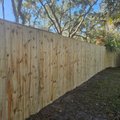
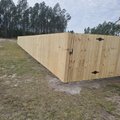
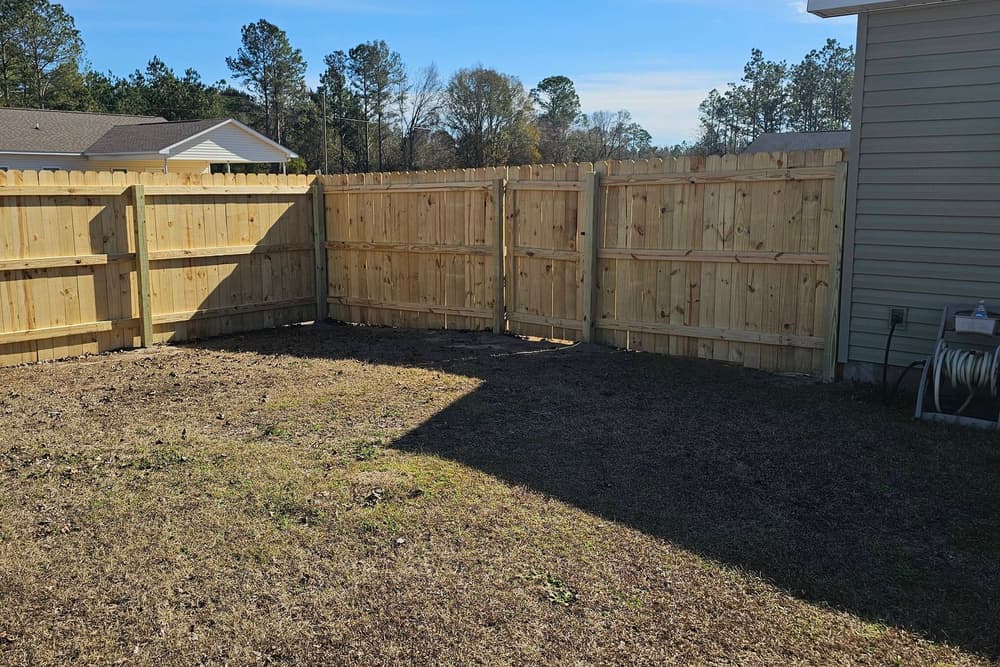
Six feet: the privacy standard, and the overwhelming majority of what we build. It keeps views into your yard from adjacent yard and most first-floor windows.
Eight feet: Actual screening, sound attenuation, second story view blocking. Much more expensive than 6'. Not linearly so. Taller boards, heavier rails, more depth and often size of posts for wind load. You won't get it without specific approval in many jurisdictions.
Height buys less privacy than you think
A six foot fence will stop someone in the next yard from seeing your patio. Not someone upstairs. And if it's a 2 story house next door you aren't going to be able to do anything that's legal to keep someone upstairs out.
If it's an upstairs window that's your problem, then a bigger fence is a waste of money. Planting or pergola or screened off area fixes it. A fence doesn't.
And if the next yard is higher than your yard, then your 6 foot fence is 'shorter' as far as they can see. Measure on the high side.
Wind is the argument against height
Here on this coast, every extra foot of solid fence is extra sail area... hurricane season is June through November.
If you are in open space and you want height and you need it, perhaps a shadowbox or semi privacy style fence to allow airflow. Structural decision, not just style. If on open space and you want to go 8 foot solid privacy, you have to engineer for that. Not just go higher. That is a structure that you have to engineer for.
Where your property line actually is
This is where you wing it. And winging it is costly.
Things that are not your boundary
- The existing fence. Putting up fences in the wrong places. If it was in the wrong place in 1998, it's still in the wrong place. Re-doing it along that fence is just re-doing it wrong with new concrete.
- The tree line or hedge. Someone planted it. For reasons having nothing to do with your deed.
- Where the mowing stops. It's a habit. Not law.
- What the previous owner told you. It's commonly wrong, honestly.
What is your boundary
You have a recorded plat. And you have the survey pins that are driven in the ground. Plat = dimensions, bearings. Pins = iron rods or pipes, sometimes a few inches under the surface. Represent corners.
As long as you can locate the pins and they correspond to your plat, you're on pretty good ground. If you can't locate them (or if the plat is old and unclear), have a boundary survey done. It's not a bad expense (compared to fence cost) on a typical residential lot. Does three things at once: establishes the line, locates your easements, and provides documentation to show if someone disagrees.
If you've got some rural acreage in Glynn, McIntosh or Camden, there's really no way around doing a survey. You don't want to make the mistake of relocating your mile of field fencing... twice.
Encroachment, and why it is your problem
If your fence is over your neighbor's property, you may be forced to move or take down the fence. You can't use as defenses how much you spent on it, how long it has been there, or how confident you were.
This also muddles their ownership of the property. Which comes up at the most inopportune time, when you or they want to sell the property. The buyer's attorney finds the muddle. The closing gets delayed. Now there's a law aspect to fences.
The practical fix: So often you'll find people who intentionally place their fences a few inches inside their property boundary, instead of right on the boundary. You lose a bit of land you weren't using and you don't have to worry about a whole class of problems. But make sure you've got a survey indicating this was done on purpose.
And you should be aware that the parallel problem, where continuous use of property can under certain circumstances become a claim to the property, is possible. This is something an attorney will address, not a fence company. But it is a reason not to let a misplaced fence stand for decades.
Which way does the finished side face?
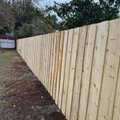
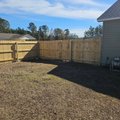
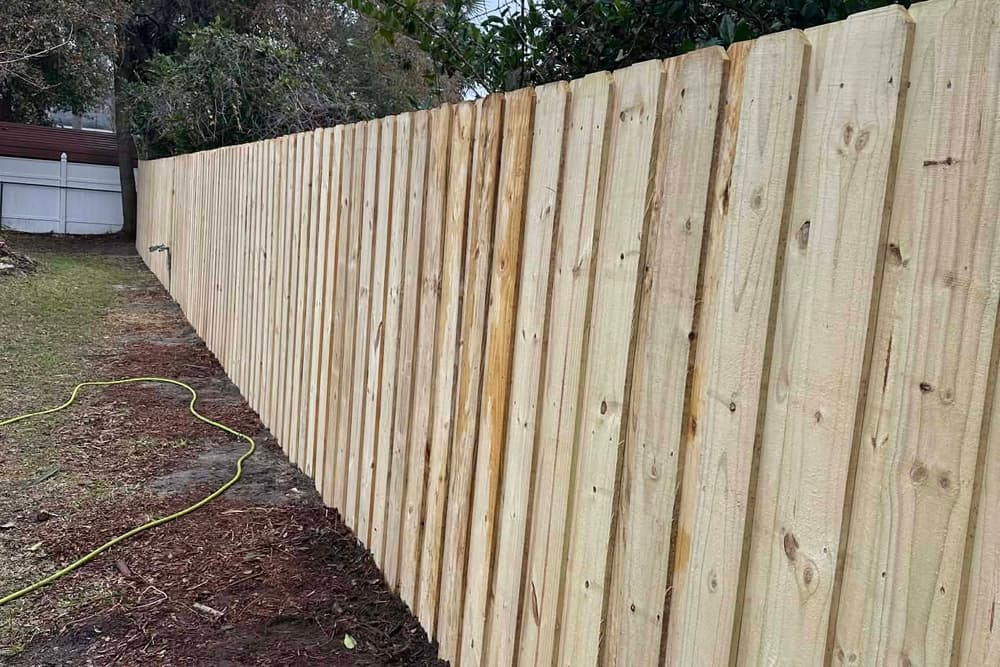
For a wood privacy fence, there are posts and rails on one side, and smooth boards on the other. Tradition (as well as a lot of HOA covenants) has the finished side (the one facing the neighbor and street) on the outside.
There are 3 solutions.
- Finished side out. Tradition (and, generally, what the covenants want you to do). Check your covenants.
- Shadowbox or board-on-board. Alternate boards across the rails. It's the same from both sides. More wood needed. Also diplomatic solution.
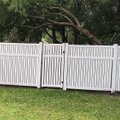
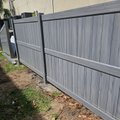
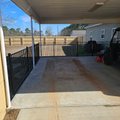
- Vinyl or aluminum. Both the same from both sides. So no need to worry. (see vinyl fencing, aluminum fencing).
Talk to the neighbor
Not a legal requirement. But the best bang for 10 minutes of your time on the entire project.
Let them know what you're doing, where, and when. Do they know anything about the boundary? Sometimes they'll offer a shared line with split cost. That's pretty common and pretty reasonable. Other times it just means you don't end up in the position of "well the first they've heard of it is an 8am crew with a post auger."
If there's any question about the line, get it settled before you build. The price for two neighbors and a surveyor is cheap for the afternoon. Two neighbors and a built fence is a dispute.
The order to do things in
- Locate your plat, and your pins. Or have a survey done to establish the boundaries.
- Find easements. They can take away the fence even if it isn't on the line.
- Determine height by function, check it against zoning and covenants.
- Go talk to the neighbor.
- Check permits. Then call Georgia 811 to mark utilities.
- Build.
Check out our guide to fence permits in Glynn County. It outlines the steps to get a permit. Our HOA and setback rules guide explains the private restrictions, which are often more stringent than county rules.
We would rather find the problem than build into it
We walk the line on every quote. If you aren't seeing the same pins as where you believe the line should be or there is something that seems like an easement, we'd much rather just point that out while it's still a dialogue.
Request a free quote or call (912) 674-0619. More info on our coverage is on the service areas page.