Call us (912) 674-0619
 goldenislesfae@gmail.com


Hurricane season is the first of June to the end of November. Generally speaking, it's the fences you inspect in April that get through, not fences you're tinkering with in September.
It's not hard or complicated, but easier when the weather is nice.
Understand what actually fails
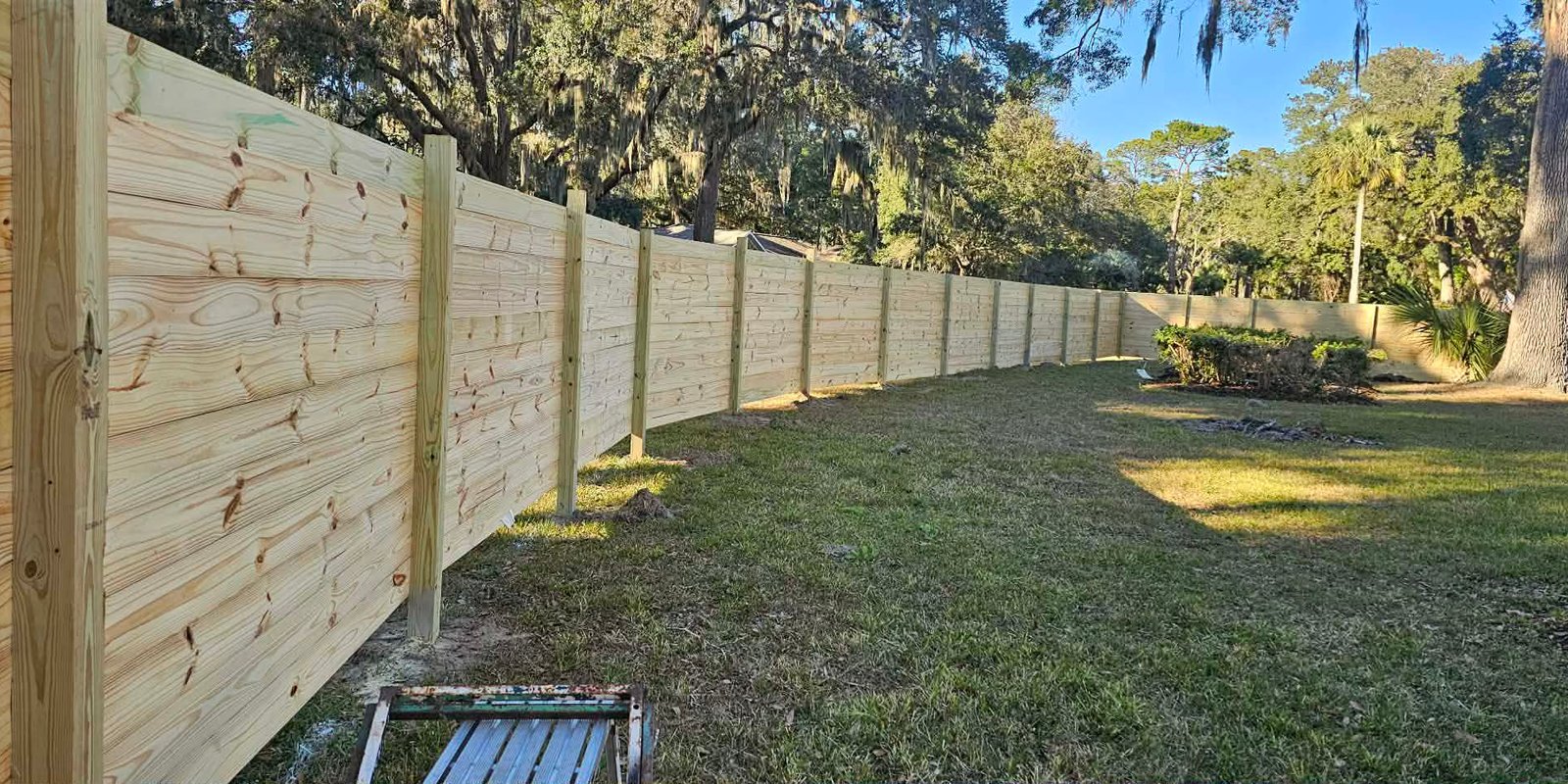
A real privacy fence is a wall that the wind doesn't blow through so it has to go around. What it can't go around, it pushes. All that force ends up on the posts.
Fences go out at the bottom. Annoying: boards come off. Rebuild: posts break or lever out. Most of what follows is about saving the posts.
In order of weaknesses:
- Posts: rotted at ground line or set too shallow or not enough concrete
- Fasteners: Corroded all the way through causing the boards to come off and go airborne.
- Gates: the heaviest moving part on probably the most likely to be seized hardware
The spring inspection
Do this in April or early May. Check the entire line slowly.
Push every post. Push HARD with both hands at chest height. Solid. No give whatsoever. If there is give it's either rotten at grade or the concrete is bad or soil is washed out. It's not going to take a good hit.
Probe the base of wood posts. Push in a screwdriver at grade level in the timber (the area that's always wet). If you can easily push it in, even if it looks good, it's rotten on the inside. Flag it.
Check the fasteners. Rust stains down the boards. Corroded out screw heads. Nails coming out. Usually it's the hardware that fails first here on the coast. Boards that are only secured with a single fixing are a missile waiting for a gust.
Look at the rails. Rails sagging. It's either the fixing to the posts that's failing, or the wood has gone soft.
Work the gates. Open and close. If it's sagging or dragging or catching, it's got loose hinges or the gate post is moving. Gates fail more frequently than the fence. A gate that gets torn off usually takes the posts with it.
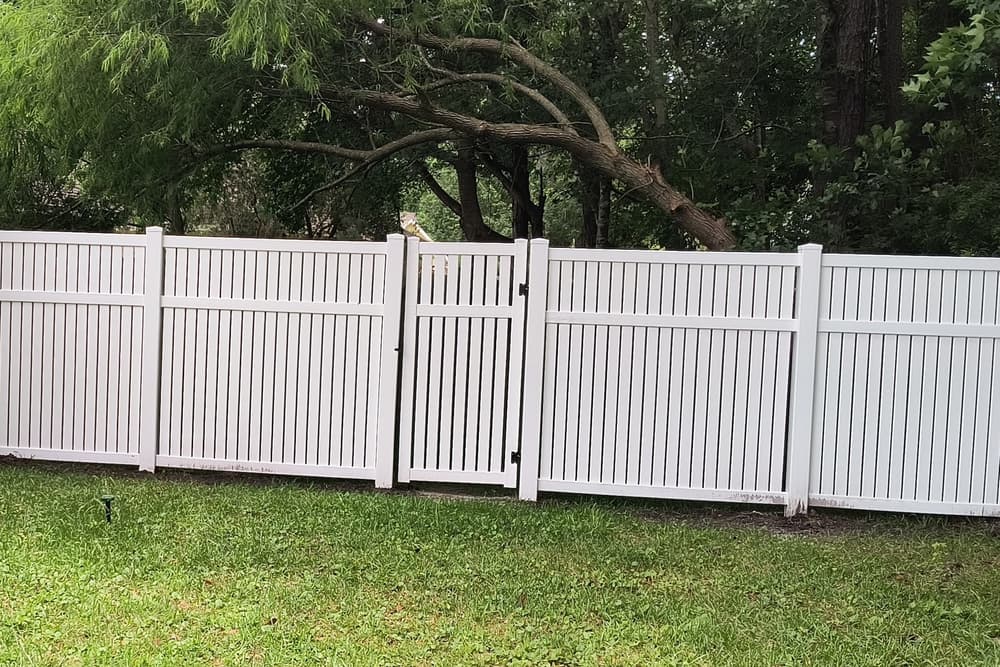
Look up. Dead branches hanging over the fence line are the #1 cause of storm damage here. Predictable. If you see a limb in April, it's a repair bill in September.
Fix what you found
Loose posts are king. Some posts can be reset depending on the failure. But rotting ones need to be replaced. And when it's done correctly, it needs to use ground contact rated wood and be deep enough. The concrete should be done such that water is shedding from it instead of puddling around it.
Corroded fasteners should be stainless or hot dipped galvanized replacements. If you're re-bolting a lot of boards... do all of them, not just the obvious ones.
Sagging gates often need hinges tightened or upgraded. Sometimes they need an anti-sag cable or brace. But if the gate post is moving, you need to work on the post. Not the hinge.
Overhanging limbs should be done way before season. Anything big or near a power line, hire someone with the proper gear.
If you find multiple failed posts during the inspection, maybe a talk is in order. Instead of trying to fix. See fence repairs.
Trim the trees, seriously
Lots of storm fence damage is from falling trees, not the wind. Live oaks just drop huge limbs. Pines snap. Water oaks are very prone to shattering over time.
What's over and along your fence? Cut out all the dead wood, splits at crotches, limbs that are heavily leaning in the prevailing wind direction. Do it before June. If it's a dead or clearly dying tree, deal with the tree.
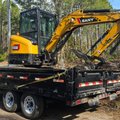
If it's more than pole saw work to clear things, we can do land clearing and haul it off for you, instead of leaving you with a mess.
Drainage matters more than people think
Posts rot because they are wet. Much of Glynn County is flat. If you have a water table near the surface (on low areas, areas close to marsh), you are eating your fence slowly and steady because water is standing along the fence line for days at a time.
Any area where water puddles on your property (and will every time there is a good rain event) is where your fence is going to rot first. By getting a better slope on that area (or by adding a swale, or drain), you're taking care of your fence AND your yard. That's a grading job, and do it once.
In the days before a storm
Practical things that you can do when a storm is actually forecasted.
Clear the yard. Patio furniture, planters, garbage cans, garden tools, trampoline, anything on the deck. Anything that's loose creates holes in fences. And it'll go way further than you think.
Open the gates, or secure them properly. Unlocked gate in high wind just turns itself and its posts into a pile of trash. Either latch it hard with drop rod engaged or consider just taking one of the gate leafs off if you're in a vulnerable spot and laying it flat to store.
Do not try to brace a solid fence. Don't be tempted to try and prop something against it, odds are better that it'll end up being a lever.
Photograph the fence. 5 minutes. Full line. Close and wide. As we talk about in the storm damage and insurance guide, if you have to file a claim having pictures of the prior condition is the most valuable thing you could have.
Check your policy limits and deductible while you've still got power and time. Coastal policies often have a percentage named storm deductible vs a flat amount. Not fun to find out afterward.
After the storm
Look before you touch. Downed conductors can put power through a metal fence. There may be tension on leaning bits.
Take pics of everything before you remove anything. Get a detailed estimate. Beware of strange crews that show up the week after a storm to collect huge down payments.
If you are building new this year
Design for the wind up front. It'll cost a bit more, but the entire fence will be saved.
- Deep-set, ground contact rated posts in well-positioned concrete.
- Don't stretch out the post spacing to conserve holes. 6-8 feet on solid fence.
- Always use hot dipped galvanized or stainless for fasteners. This close to the salt.
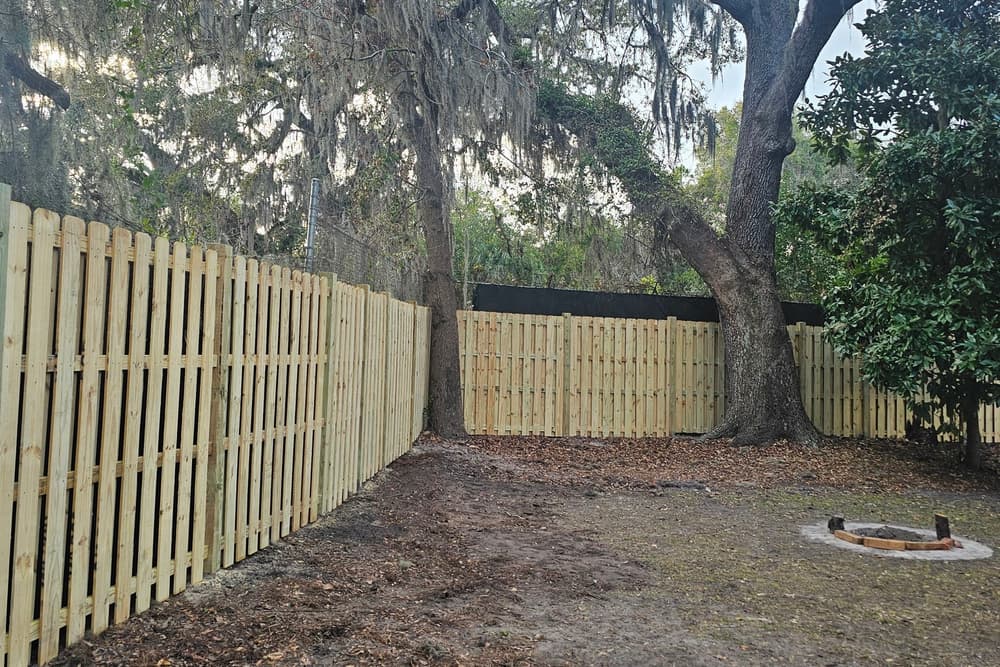
- For open lots consider shadowbox or semi-privacy style. Let the air flow rather than push.
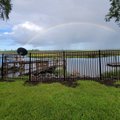
- For really exposed lots, with a view worth preserving, aluminum fencing won't really notice a storm.
We discuss the pros and cons in wood vs vinyl vs aluminum. See the best fence material for coastal Georgia for some info on building for our climate.
Get it looked at before June
See those soft posts. Notice the rusty hardware. Observe that gate not quite closing right. This is the time to fix it. Don't wait until an evacuation period.
We do inspections. We repair. We restore. All over Brunswick, St. Simons Island, Jekyll Island and nearby counties. Ask for a free assessment or call (912) 674-0619.