Call us (912) 674-0619
  goldenislesfae@gmail.com
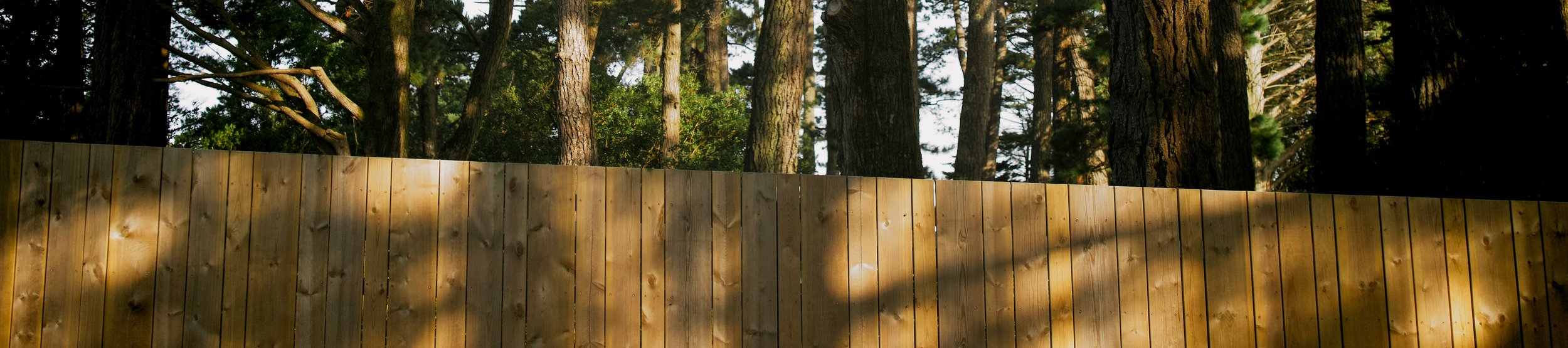
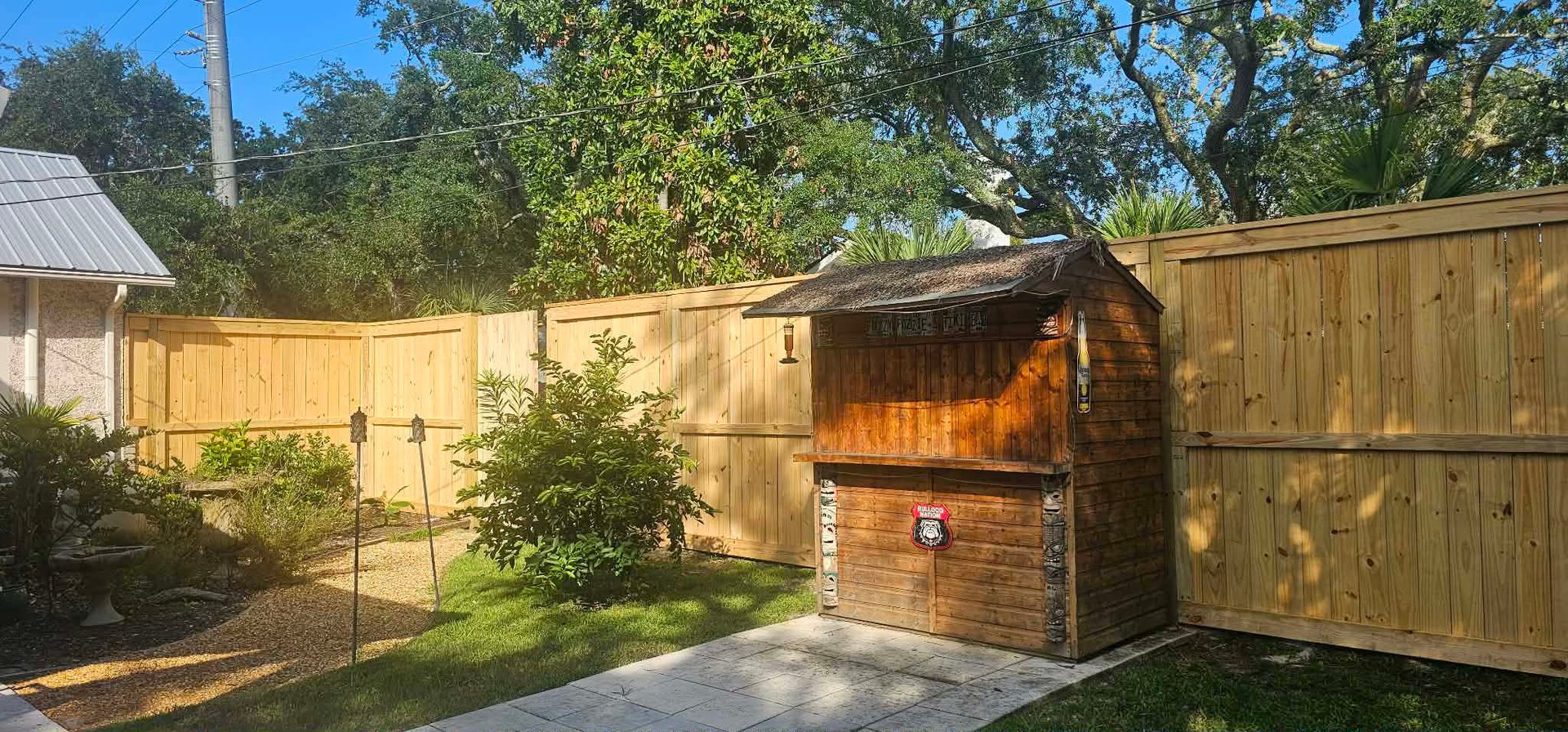
Wood fencing on St. Simons Island: built around the oaks, the covenants and the salt
A wood fence on St. Simons has to answer to three things a Brunswick fence never meets.
The first is the trees. St. Simons Island is defined by its live oaks, and the roots of a mature oak spread far past the canopy at just the depth a fence post needs to go. The second is the paperwork. Most of the island's neighborhoods, from Sea Palms to Hampton Point to the smaller streets off Frederica Road, have covenants that govern fence height, style and even stain color, on top of Glynn County's permit. The third is the salt. Air off the Atlantic on the East Beach side and off the Frederica River on the west dries and grays untreated pine faster than anything on the mainland.
Golden Isles Fencing and Excavation builds wood fences across the island with all three in mind. We are a family-owned, Christian-based company based in Brunswick, and we have spent enough time on St. Simons to know that a fence job here starts with the covenants and the tree survey, not with the post-hole digger.
Working around live oaks without hurting them
Glynn County's tree protection ordinance covers mature live oaks and other specimen trees, and on St. Simons that means most lots. Even where a permit is not triggered, cutting a structural root to set a post can kill a tree that has stood for two centuries and shaded the house for decades. We treat the trees as a fixed part of the design. Near a trunk we hand-dig rather than auger. Where a large root crosses the line we shift the post spacing to miss it, or bridge it with a shorter panel. If a root cannot be avoided, we stop and talk to you before cutting anything.
The canopy also changes how the fence ages. Boards under heavy shade stay damp longer and grow mildew, so on shaded runs we leave a small gap at the bottom of the pickets for airflow and recommend a mildew-resistant stain.
Covenants, the county, and the marsh buffer
St. Simons is unincorporated, so fence permits come from Glynn County Community Development rather than a city office. On top of that, most subdivisions have an architectural review committee. Sea Palms, the Island Club, Hampton Plantation and the newer developments along Sea Island Road each have their own written standards, and they differ on things like maximum height, whether the finished side must face the neighbor, and which stain colors are allowed. We ask for the covenants before we draw a line, and we will submit the plan to the committee for you.
Lots that back onto the marsh, along Village Creek, Dunbar Creek or the Frederica River, carry one more layer. Georgia's coastal marsh rules set a buffer along the marsh edge where ground disturbance is restricted. We keep the fence line and our equipment out of that buffer, and on those lots we usually stop the fence short of the marsh and let the view carry the rest.
Posts in island sand
The island is a barrier island, and under the topsoil is clean sand. Sand drains well, which is good news for the wood, but it grips a post less firmly than the clay pockets in Brunswick. For a six-foot privacy fence on St. Simons we set six-by-six ground-contact posts deeper than our mainland standard, in wider concrete footings, so a long run along an open lot does not rack when a tropical storm pushes on it. In the low areas of the island where the water table sits close to the surface, the top of each footing is crowned so rain sheds away from the post rather than pooling around it.
Styles that fit the island
- Board-on-board privacy. Six-foot overlapping pickets for backyards and pool surrounds, usually with a cap rail because many HOAs ask for a finished top.
- Shadowbox. Our recommendation for exposed lots on the East Beach and south-end ocean side, where a solid wall takes the full force of an onshore wind.
- Picket. Front-yard fences in the Village and along Mallery Street, sized to the four-foot front-yard limit most covenants and the county apply.
- Horizontal slat. A cleaner, modern look that has become popular in the newer builds off Sea Island Road, framed with heavier rails so the long boards do not bow.
How an island fence job runs
- Estimate and documents. We walk the lot, photograph the trees on the line, and collect your covenants and any survey you have.
- Approvals. We prepare the HOA submission and the county permit together so both move at once.
- Scheduling. If the house is a rental, we schedule the posts and the framing between bookings.
- Build. Hand-digging near the oaks, deep footings in the sand, screwed pickets scribed to the ground.
- Finish. Walkthrough, cleanup, and a written note on when to seal the wood.
Keeping a wood fence looking good in salt air
Give the treated pine four to six weeks to dry, then seal it. On the ocean-facing side of the island we suggest a penetrating oil-based sealer with UV protection and a recoat every two years. Under the oaks, choose a stain with a mildewcide and wash the shaded side each spring. Rinse the fence with fresh water after a storm that has thrown salt across the yard. A wood fence on St. Simons that is cared for this way keeps its color and stands straight for well over a decade.
If you are planning a fence on St. Simons, we offer free on-site estimates and financing for larger projects. Send us the covenants and a photo of the line, and we will tell you what will get approved and what it will take to build.
Wood fencing elsewhere in the Golden Isles
The island is its own case. For a mainland or Jekyll job, read about wood fencing in Brunswick, GA, wood fencing on Jekyll Island, and everything we do as a fence company on St. Simons Island.
Other fencing options on St. Simons
Many island owners compare wood with low-maintenance materials, so see our vinyl fencing on St. Simons Island, aluminum fencing on St. Simons Island, fence repairs on St. Simons Island, and wood fencing service overview.
Contact us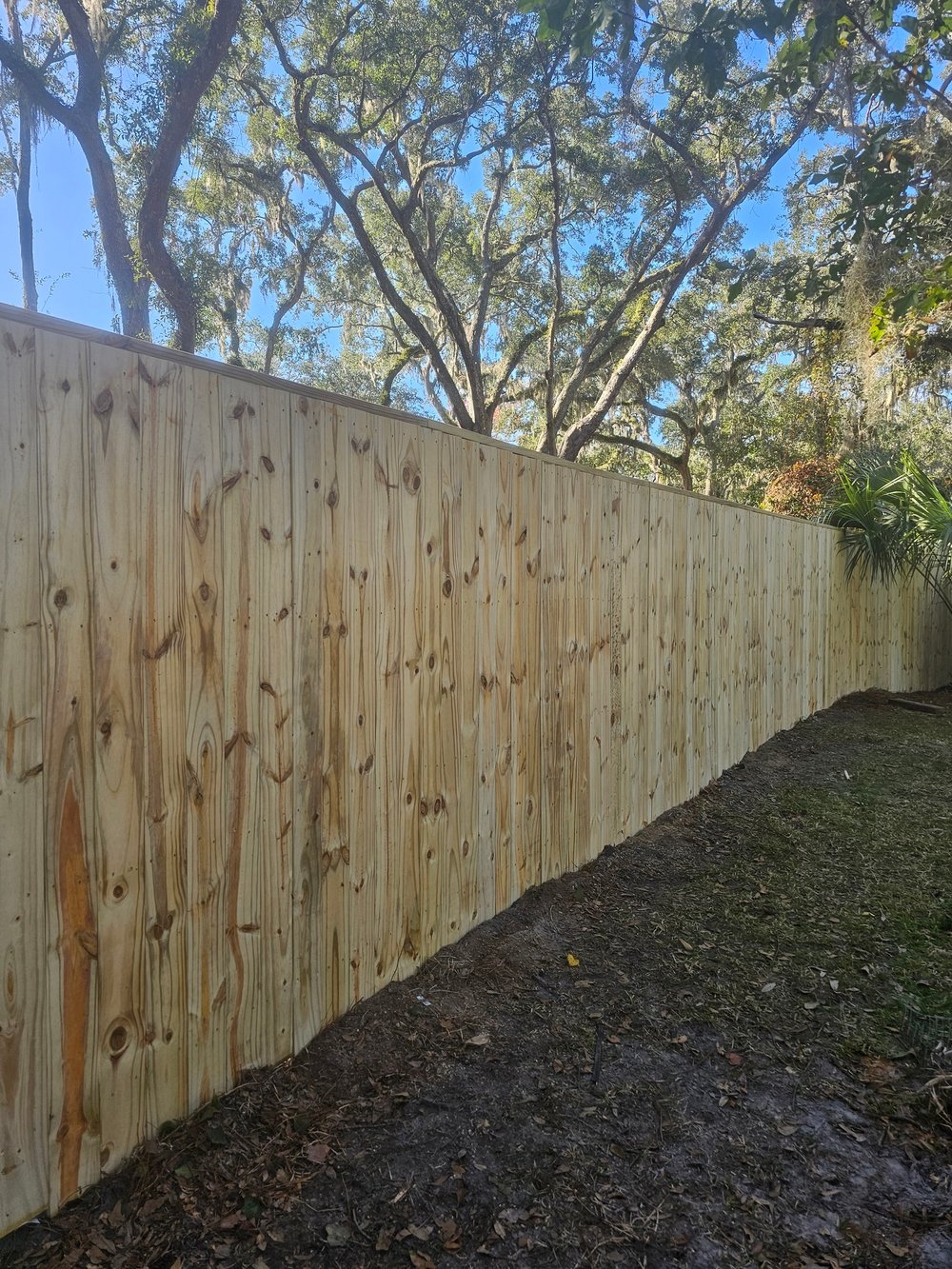

Common questions about wood fencing on St. Simons Island
What island homeowners ask us most, from tree roots to rental turnover.
Yes, but carefully. Glynn County's tree protection rules cover mature live oaks, and even where a permit is not an issue, cutting a major root to set a post can kill a tree that has stood for two hundred years. We hand-dig near trunks, shift post spacing to miss large roots, and sometimes bridge a root with a shorter panel rather than cut it.
On most of the island, yes. Sea Palms, Hampton Point, the Island Club and many smaller subdivisions have architectural review committees with rules on height, style, stain color and which side faces out. We ask for the covenants before we design anything so the fence is approved the first time.
St. Simons is unincorporated, so permits come from Glynn County Community Development, not a city office. Lots near the marsh or the beach can also fall under state buffer rules. We check both before we quote.
On the ocean side, in East Beach and along the south end near the Village, salt spray dries and grays unsealed pine noticeably faster than it does in Brunswick. A penetrating sealer applied after the wood dries, and refreshed every two years, closes most of that gap. On the marsh side and under the oak canopy the exposure is much milder.
Clean sand actually drains well, which is good for the wood, but it gives less grip than clay. We set posts deeper than the mainland standard and use wider concrete footings so a long privacy run does not rack in a storm. Where the water table is high, the footing is crowned so water sheds off.
Yes. A lot of our island work is scheduled between bookings or in the off season. Tell us your calendar and we will plan the posts and the framing around it so nobody arrives to a half-built fence.