Call us (912) 674-0619
  goldenislesfae@gmail.com
Land grading on Jekyll Island: small drainage fixes on leased lots, done within the rules
On Jekyll, grading is a scalpel, not a bulldozer. The island allows targeted fixes, and that is what we do.
Jekyll Island is a Georgia state park. The homes along Beachview Drive, Riverview Drive and the streets between them sit on lots leased from the Jekyll Island Authority, and the Authority reviews changes to the ground as closely as changes to a house. Nobody regrades a Jekyll lot the way a lot in Brunswick gets regraded. What leaseholders need, and what Golden Isles Fencing and Excavation does here, is smaller: restoring the fall away from a foundation that has settled, fixing the low corner that floods a patio every summer, building a small pad for a shed or an outdoor shower, laying a driveway base that drains. All of it inside the lease line, away from the dunes and the protected trees, and with the Authority's approval where the guidelines call for it.
We are a family-owned, Christian-based company based in Brunswick. If what a lot needs is more than the island will allow, we will say so at the first visit.
Why Jekyll yards hold water
The residential district sits in a maritime forest on barrier-island sand, with a high water table in the lower streets between the two drives. Under the canopy the ground gets little sun, and after a storm the sand above the water table stays saturated with nowhere for the water to go down. Add a house that has settled a little over fifty years so the ground now slopes toward the slab instead of away from it, and you have a crawl space that never dries and a patio that floods. The fix is not elevation; it is a path. A shallow swale routed around the trees, or a French drain where a swale will not fit, gives the water a way out.
What goes through the Authority
The Authority's guidelines govern, and we do not guess on your behalf. In our experience, minor regrading close to the house to restore drainage is treated as maintenance, while anything that changes the lot's elevation, moves significant soil, brings in fill, or affects trees or the lot's edges is reviewed. We describe the work in writing, help you confirm with the Authority where needed, and do not start until that is settled. Large-scale regrading and raising a lot with fill are not things we have seen approved, and we will not propose them.
Working around the forest
The live oaks, pines and palmettos around every Jekyll house are protected, and grading is the fastest way to kill an oak: cut the grade under the canopy and you sever roots; pile fill against the trunk and you smother them. We keep the machine off root zones, work by hand near trunks, never place fill against a tree, and route water past the canopy line rather than through it. The forest floor stays forest floor. On lots that border undeveloped land we stay inside the lease and leave the state's ground alone.
Dunes and the beach side
The dunes along Beachview Drive fall under Georgia's shore protection rules and are entirely off limits. On a beach-side lot the drainage plan stays inside the leased area and directs water away from the dune line, never toward it. We are careful about exactly where the lease ends on these lots before any work is planned.
Fill, flood zones and the causeway
Fill on Jekyll is used sparingly: a few yards for a pad or to restore fall against a foundation, placed in compacted lifts, and only where the Authority allows it. Much of the residential district sits in a mapped flood zone where fill can need review, and every load crosses the Downing Musgrove Causeway and pays the entry fee. On most lots the honest answer is a swale or a drain rather than fill, and it is usually the better answer anyway.
Pads and driveways
For a shed, an outdoor shower or a small slab we build a pad in compacted lifts, crowned to shed water and set above the seasonal water table, with the organics stripped first so it does not settle. For a driveway base we build to drain and keep the footprint to what is approved. Many Jekyll houses date from the mid-century and sit on septic or older utilities; we locate everything before planning and keep the machine off it.
How a Jekyll grading job runs
- Photos and a visit. We look at where the water sits, where the house has settled, and where the lease line and the trees are.
- Shoot the grades. Laser level across the yard to find the outlet, which on Jekyll is often the street or a natural low point at the edge of the forest.
- Approval check. Anything beyond minor maintenance is confirmed with the Authority before we start.
- Light-touch grading. Small equipment, hand work near the trees, swale or drain routed around the canopy.
- Finish and photos. Downspouts extended, disturbed ground seeded or mulched, pictures sent to owners who are away.
Estimates on Jekyll are free. Send a photo of the wet spot after the next rain, and your street, and we will tell you what the island will let us fix.
Grading on the mainland and St. Simons
For a lot where a full grading job is possible, read about land grading in Brunswick, GA, land grading on St. Simons Island, and everything we do as a fence and excavation company on Jekyll Island.
Related work on Jekyll
A drainage fix on Jekyll often pairs with our land clearing and yard cleanup on Jekyll Island, aluminum fencing on Jekyll Island, fence repairs on Jekyll Island, and land grading service overview.
Contact us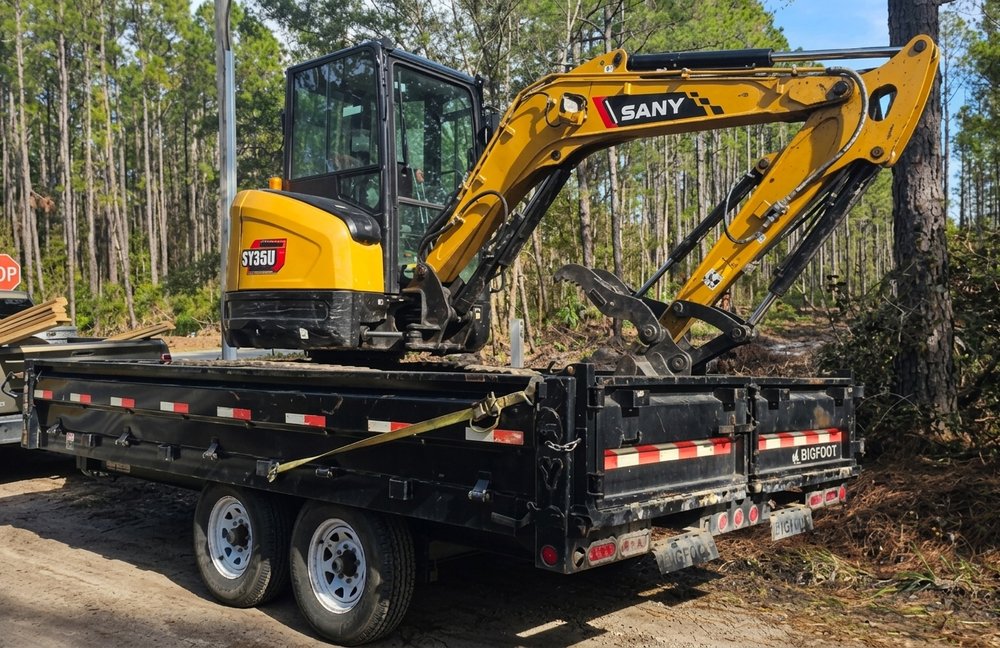

Common questions about land grading on Jekyll Island
Grading on Jekyll is small, careful and reviewed. Here is what leaseholders ask.
Not in the way you could in Brunswick. Jekyll is a state park, the lots are leased from the Jekyll Island Authority, and the Authority reviews changes to the ground as closely as changes to the house. What we do on Jekyll is targeted: fixing the fall away from a foundation, correcting a low spot that floods a patio, building a small pad or a driveway base. Large-scale regrading or raising a lot with fill is not something we have seen approved, and we will say so up front.
Minor regrading close to the house is often treated as maintenance; anything that changes the lot's elevation, moves significant soil or affects trees or the lot's edges is reviewed. The Authority's guidelines govern, and we help you confirm before we start rather than guess.
Only in small quantities for a pad or a low spot, and only where the Authority allows it. Every load crosses the causeway, and much of the residential district is in a mapped flood zone where fill can need review. On most Jekyll lots the answer is a swale or a drain rather than fill.
The residential district sits in a maritime forest on barrier-island sand with a high water table in the lower streets. Under the canopy the ground gets little sun, the sand above the water table stays saturated after rain, and the water has no path out. A shallow swale routed around the trees, or a French drain, gives it one.
Not the way we do it. The Authority protects the maritime forest, and grading is the quickest way to kill an oak. We keep the machine off root zones, work by hand near trunks, never pile fill against a tree, and route water past the canopy rather than cut through it.
The dunes along Beachview Drive fall under Georgia's shore protection rules and are off limits. Drainage on a beach-side lot is planned to stay inside the leased area and away from the dune line entirely.